Category: Political Economy
-
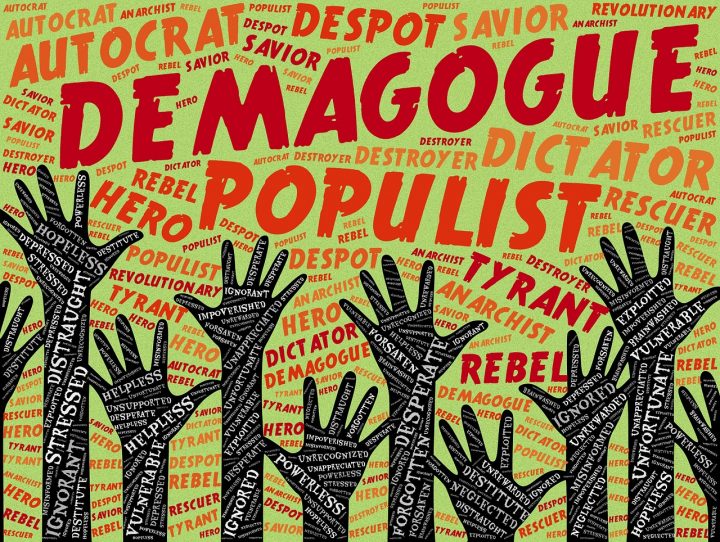
Nationalism, Populism and Neo-Liberalism
(This article was published in BodhiCommons online portal. Link for the article- http://bodhicommons.org/bjp-hindutva-nationalism-populism-neoliberalism )
“Nations are not something eternal. They began, so they will come to an end”, said Ernest Renan in his celebrated article ‘Qu’est-ce qu’une nation?’ In the contemporary period, the perversion of nationalism by stressing ethnic politics has damaged the post-colonial legacy of nationalism and is now considered a problem in the general academic discourse and the public as well. Amidst the surge of Hindu Nationalism and Populism, set up using the state apparatus in contemporary India, it’s vital to discuss the role of the state, political party, market, and relationally embedded individuality. It is also equally important to understand whether a newly emerging Indian Nation, itself a modern imagined community, has anything to do with neo-liberal aspirations of individuals.
Certain parameters have been instrumental in shaping nations and, subsequently, nationality and nationalism. The foremost among them is ‘territoriality’, which is an essential component to build up the narratives of nationalism; second is ‘identity’, with the help of which masses could be galvanised and consolidated, and the third is ‘homogeneity’ within a society, embodied in that particular nation-state to sustain this model based on nationalism, populism and majoritarianism.
Today’s narratives of nationalism and populism of the RSS-led BJP government are far newer and, to some extent, different from those of RSS-patriarchs like Savarkar, Hedgewar and Golwalkar. Savarkar’s nationalist narratives based on Hindutva were more of an ‘identity’ approach, which sought to assert ‘Hindutva’ in a territorial sense, i.e., in terms of ‘son of the soil’ and the ‘Vedic fathers’. Whereas Golwalkar and Hedgewar’s Hindutva-nationalist narratives were based on ‘spirituality’, embedded within the religious ideas of ‘Hinduism’ and ‘cultural’, which endorsed religious identity and the practice of the ‘Sanatana-Dharma’ as well.
However, to impregnate such majoritarian-nationalist narratives in the minds of the masses, one does not only need rhetorical building, but also institutional and organised support. RSS does the work of rhetoric-building and organisational support, and the BJP was/is supposed to provide institutional support. This is why it becomes essential to look at Modi’s populist politics of nationalism through the prism of the state—its policies, political party, service it provides, and the market that endorses and sustains such politics and the individuals who become its foot soldiers.
We would first examine the role of the state in this article, which plays a vital part in defining and asserting the politics of territoriality. To provoke the masses and capture their imagination, the BJP, since it came to power in 2014, has continually used territoriality to inspire them to become part of its political project of Hindutva nationalism. The hyper-nationalist narratives have been employed for this purpose, like Uri “Surgical Strike” (subsequently a movie on it), making Pakistan the enemy state, passing the ruptured legislature on Indo-Bangladesh Border issues; recently, revoking Article 370 and the NRC Bill, et al. This is how the BJP systematically sought to leverage territoriality to attract mass support. Secondly and most importantly, the BJP came up with innovative ideas to reach the masses using the state apparatus itself. The factor that distinguishes the BJP’s nationalism from that of Indira Gandhi is that it can successfully use both institutional and procedural mechanisms. It has become evident that fascist forces find it easier to incorporate ideas within a bourgeois democratic framework, whose institutions and procedures are integral parts. Indira Gandhi could only use institutions to advance her politics of nationalism and populism, but never could (or never wanted to) hijack the procedural mechanisms that still survived within the democratic framework in India. Nonetheless, the BJP could do it, bending and moulding procedures in its own way to establish the politics of populism through measures like demonetization, passing the Aadhaar Bill as a money bill, and invoking Article 356 (President’s Rule) in various states, undermining precedence and procedures. If, for now, we take the example of JNU and how the government is using the institution and procedures as well, to suppress the free voices of students and label dissent as treason and issue certificates of anti-nationals. Here, in the JNU case and in other educational institutions, the BJP is not only using institutions to control power through the appointment of compliant personnel but also flouting established constitutional and procedural norms, such as failing to involve students’ unions in crucial decision-making, controlling the curriculum, and censoring the speeches of critics.
The role of the BJP as a ‘political party’ can be better understood in terms of rhetoric-building with the RSS’s help. The majoritarianism of the BJP as a party combines cultural nationalism based on identity and othering the rest of the communities, which also includes cultural conservatism, intensified misogyny, and a firm grip on societal forces using services. This cultural nationalism of RSS-BJP demand homogeneity in the society, most of the times which can be brought about only with ‘ascribed-identities’. And to achieve this, it tries to build grand narratives to subsume all other small, regional, and local identities; one such narrative is ‘Hindi-Hindu-Hindustan’. This kind of narrative not only encourages the upper castes and upper classes to be a part of its political project but also has the capacity to subsume large numbers of OBCs, Dalits and tribals as well. This galvanisation of masses is done through services provided by RSS itself and its on-the-ground offshoots, such as various ‘prabodinis’, ‘vanseva samitis’, ‘shakhas’, etc. Such offshoots do the work of ‘Sanskritisation’ and ‘Hinduisation’ of communities other than the upper castes, which ultimately helps the required homogenization of the society to build its own hegemony. Jairus Banaji says, in India, the growth of fascism has been a gradual, step-by-step process where the fascist elements penetrate all sectors of society and emerge having built up that groundwork.
Thus, it becomes very important to understand how this mass base is constructed. What allows for the construction of a mass base by radical right-wing parties? Generally, fascism presupposes a worldwide economic crisis, but in the case of India, the BJP’s majoritarian nationalism presupposed (before the 2014 elections) the moral crisis in terms of corruption, and that is how Anna Hazare’s protest was hijacked by RSS-BJP. We could also say that such fascist majoritarianism was not the creation of RSS-BJP, but the victory of BJP in the 2014 general elections (and any election BJP won thereafter) was the creation of majoritarianism that came out of an ‘imagined’ moral crisis. The Commonwealth Scam, Coal-gate Scam, Anna’s protest against corruption, orchestrated attacks on minorities in Orissa in 2007 and 2008, and in Muzaffarnagar in 2013, and many more such events served as precursors to a moral crisis that captured public imagination, helping the BJP win elections in a big way. Beyond this, as Christophe Jaffrelot says, the BJP, as a political party, has also been using innovative communication techniques—repeated ad nauseam — catchy, vague slogans that attracted the masses, though all were empty signifiers, for example, ‘Acche Din Aanewale Hein!’. There has also been the use of certain religious artefacts, myths, rituals, and symbols through which deification is achieved. For example, the posters of fiery Hanuman, angry Shiva, Rama on the battlefield, such symbols we see, helped assert the putrid ‘purushartha’ (virtue of being male), which ends up being glad/satisfied in doing ‘mob-lynching’. These are also called ‘stormtrooper tactics.’ Banaji again says—’hate propaganda clears the ground for physical attacks and mass killings by producing a ‘climate’ of violence where communal ‘riots’ (i.e. pogroms) can ‘flare up’ (be organised) at any point of time. The “climate” is worked matter, the object of a concerted praxis.’
The schools, the job-places, the families, and the whole society become the factories of ‘reactionary ideology’ of which whataboutery becomes the merest weapon. However, such tactics produce societal homogeneity based on hatred and jingoism; subsequently, the market helps sustain such politics. To understand this, we need to go back to the period around 1991, when three instrumental forces were at play, which enabled the BJP to capture public imaginations and consolidate mass support for its every wrongdoing. These forces were market, mandir and Mandal. It amazes us how RSS-BJP could get such mass support, being known as an upper-caste Brahmanical organisation, especially from OBCs and Dalits. For me, the reason lies in the opening of the economy in 1991 with the New Economic Policy, generally known as the Liberalisation-Privatisation-Globalisation (LPG) reforms, and in the subsequent Neo-liberal framework. It is also evident from many surveys that the BJP has the largest vote bank of OBCs, the middle class, and new entrants to the middle class.
The question of locating individuality within discourses of nationalism in India must be considered pertinent in the context of the historical development of populism post-independence, which intersects with state policies and later with the advent of the neoliberal framework in Post-reform India. If we look at the historical trajectory of development of OBC block as a political power and economical pressure group, we could see rise of OBCs initially in post-independence period with fragmentation of land, subsequent green revolution and new technological innovations in farming; their entry into new services sector on the advent of reforms and free market—this could help OBCs to uplift themselves as an economic force. The Mandal Commission gave them a chance to uplift socially as well; reservations in education and government jobs could do wonders for them. Nonetheless, mandir politics could not remain separate from them. For the first time, OBCs had the chance to rub shoulders with the upper castes (especially Brahmins), and we could see them adopting Brahmin rituals, sacred thread ceremonies, and other practices. This was not happened in isolation; in effect it went beyond OBC block too, this miraculous rise of OBCs inspired other communities too.
The combination of the promise of economic prosperity, political power, and social upliftment created a neo-middle class and inspired the masses to be part of this joint-venture project of Mandir and Market. People’s aspirations rose since then, yet no one could see or understand that there would always be a gap between aspirations and achievements. In effect, OBCs, Dalits and other marginalised communities started playing a role as individual hyper-consumerists. In addition, neoliberalism created a space for such individuals to serve as precursors to hyper-nationalist narratives. The narrative of “development” although an empty signifier, culminated in suppression of cultural anxieties, and populism lying between that void space of aspirations and achievements, thereupon pacifying the public outrage against any illiberal, autocratic move of the current government.
Harsh Mander has said that this neo-middle classes are today socialised in not one but three normative systems which justify every act of BJP government—caste system, ‘refined’ lifestyles’ and rise of neo-liberal-market-led growth with ‘socialist guilt’. That is why it is very important to understand nationalism not only as an isolated project but also its connections with the conspicuous lethal project of the BJP as a political party and state-backed neo-liberalism, which has galvanised masses to be a part of it, and this poses an immense threat to the very social fabric of Indian society. Hence, we need to understand this whole structure, develop a critique, and act accordingly.
-
‘संरचनीय हिंसा’च आजच्या स्त्री-पुरुषांमधील आर्थिक असमानतेचे आणि सामाजिक अपवर्जनामागील कारण आहे!
अक्षरनामा (Tue , 05 November 2019)
अर्धेजग – कळीचे प्रश्न
हितेश पोतदारhttps://www.aksharnama.com/client/article_detail/3767
आजतागायत स्त्री-वादाची भारतातील मांडणी ही सूक्ष्म पातळीवरील म्हणजेच मायक्रो-लेवलवरील आहे. याचाच अर्थ स्त्रियांचे कुटुंब व्यवस्थेतील स्थान, रोजच्या जीवनातील पितृसत्ताक व्यवस्थाप्रणित आव्हाने, रोजगारांमधील संधी अशा इतर अनेक महत्त्वाच्या प्रश्नांविषयी ही मांडणी मुख्यत्वे दिसून येते. अशा सर्व प्रश्नांकडे बघण्याचा दृष्टिकोन हा (अतिसुलभीकरणातून येणारा) मूल्यनिर्णयात्मक आहे. सोप्या भाषेत स्त्री-प्रश्नांकडे नैतिकता, नीती आणि तत्त्वे अशा प्रिझममधून आपण बघतो. जी स्त्रियांसकट इतर उपेक्षित (marginalised) सामाजिक गटांचा लढा उभारण्यासाठीची पहिली पायरी मानली जाते. मात्र आता वेळ या कोषातून बाहेर पडून मॅक्रो-लेवलवरील मांडणी करण्याची आहे. म्हणजेच स्त्री-पिळवणुकीकडे, शोषणाकडे आणि ती करणाऱ्या दडपशाहीकडे ‘रचने’च्या (structural) स्वरूपात बघणे फार गरजेचे आहे. प्रख्यात समाजशास्त्रज्ञ अखिल गुप्ता जसे ‘गरिबी’विषयी म्हणतात की, गरिबी ही एक संरचनात्मक हिंसा आहे; त्याचप्रमाणे स्त्रीशोषण हे आज अदृश्यरीत्या हयात रचनेने अखंड ठेवण्यात येते. स्त्रीप्रश्नात सामाजिक हिंसा असूनही त्याला स्कॅम म्हणून उघडकीस आणले जात नाही, कारण त्यातून येणारा असंतोष आणि सार्वजनिक आक्रोश हा सबंध रचना उलथवून टाकण्याएवढी क्षमता ठेवतो.
लिंगभेदभावसुद्धा तितकीच गंभीर हिंसा असून ती या समाजाच्या, रचनेच्या आणि सिस्टिमच्या संमतीने कायम आहे. ही ‘संरचनीय हिंसा’च (Structural Violence) आजच्या स्त्री-पुरुषांमधील आर्थिक असमानतेचे आणि सामाजिक अपवर्जनामागील (Social Exclusion) कारण आहे. तिचाच उहापोह आपण या लेखात करूयात.
इथे जेव्हा आपण हिंसा हा शब्द वापरतोय तो थेट हिंसेविषयीच मर्यादित न राहता, व्यापक अर्थाने येतो. हिंसा ही शारिरीक हिंसेच्या पलीकडे आर्थिक, सामाजिक, मानसिक म्हणजेच एकंदरीत संरचनात्मक बनते. म्हणजेच आपण जेव्हा वरील उल्लेखलेल्या स्त्रीप्रश्नांकडे (स्त्रियांचे कुटुंबव्यवस्थेतील स्थान, रोजच्या जीवनातील पितृसत्ताक व्यवस्थाप्रणित आव्हाने, रोजगारांमधील संधी व इतर अनेक) बघतो, तेव्हा त्याचा विचार हा संपूर्ण सामाजिक रचना म्हणून व्हायला हवा. ज्या व्यवस्थेचा पितृसत्ता हा फक्त एक पैलू म्हणून दिसायला लागतो. माझ्या एका मैत्रिणीला तू ‘राज्य’ (State) या संकल्पनेकडे कशी बघतेस असे विचारले असता, आमच्या चर्चेतून असा निष्कर्ष काढण्यात आला की, ज्या देशात तुम्ही देशाला ‘माता’ म्हणून संबोधतात त्या ‘माते’ला कंट्रोल करायला तुम्हाला ‘पितृक-राष्ट्रराज्या’ (Patriarchal State)ची गरज भासते. म्हणजे थोडक्यात काय तर मुळात ‘राष्ट्र-राज्य’ हेच मुळात स्त्रीविरोधी भासू लागते. परंतु माझा युक्तिवाद हा त्याला यापलीकडेही बघण्याचा आहे. मुळात ‘राष्ट्र-राज्य’ नियंत्रित करणारी व्यवस्थासुद्धा त्यापलीकडची आहे. अशा व्यवस्थेला आपण उत्पादनाच्या साधनांवरील मक्तेदारी किंवा मालकीच्या दृष्टिकोनातून बघणे फार गरजेचे आहे. जसे प्रख्यात अर्थतज्ञा यू. कल्पगम म्हणतात- लिंग आणि वर्ग हे कधीच विश्लेषणाची दोन स्वतंत्र श्रेणी नव्हत्या. कारण भांडवलशाहीची शक्ती आणि पुरुषप्रधानत्वाची विचारधारा यांचे संयोजन हे कायमच रचनेत होते. महिलांच्या कामाचे स्वरूप हे सदैव पितृसत्तेचा थेट वापर करत भांडवलशाहीच्या शक्तीने ठरवले आहे. जर स्त्रिया बरोबरीने मार्केटमध्ये प्रवेश करू शकत नसतील, तर त्यामागे भांडवलशाही विकासाचे विचित्र स्वरूप आहे. कारण भांडवलशाहीचा कुठल्याही देशातील विकास हा त्यातील पूर्वीच्या सर्व व्यवस्था मोडीत काढून होत असतो. म्हणजे जसे युरोपात झाले. तेथील भांडवलशाही ही सरंजामव्यवस्थेच्या अस्थींवर स्वार होऊन आधुनिक विचारांच्या आड उदयास येते. परंतु भारतात तिचा विकास हा जातीव्यवस्था व पितृसत्ता यांना धक्काही न लावता/लागता झाला आहे. त्यामुळे भांडवशाहीचा भारतातील विकास हा पितृसत्तेवर व जातिव्यवस्थेवर सुपरइम्पोज करून झाला आणि पूर्वीची स्त्री-श्रम रचना तशीच राहिली. त्याने स्त्रियांना सर्वांत कमी दर्जाच्या व कमी प्रतीच्या कामांमध्ये ठेवले गेले. कारण जागतिकीकरणामुळे आणि अर्थव्यवस्थेच्या बाजारीकरणामुळे त्यांचे श्रम हे भांडवलात विलीन झाले.
‘स्त्री-श्रम’ हे अशा भांडवली व्यवस्थेत राखीव म्हणून मानले जाते. कार्ल मार्क्सच्या ‘कामगारांच्या राखीव सैन्या’ची (Reserved Army of Labour) संकल्पना इथे वापरल्यास, स्त्री-श्रम हे या ना त्या प्रकारे कायम राखीव म्हणून समजले गेले; ज्या श्रमाचा वापर हा फक्त रोजगार आणि वेतन नियंत्रित करण्यासाठी होतो. ज्याने घरगुती श्रमाच्या गतिशीलतेचा विचार करण्याऐवजी त्या श्रमातून भांडवशाहीचे दुय्यम प्रश्न निस्तरण्याविषयीचा विचार होऊ लागतो. यामुळेच स्त्री-श्रम हे मागणी-पुरवठा फ्रेमवर्कद्वारे ठरवले जाते, परंतु वेतन/रोजगार-निर्धारात पुरुषप्रधान व्यवस्थेची भूमिका अनिश्चित म्हणून सुटते आणि याने सबंध पितृसत्ताक व्यवस्था अधिक प्रभावीपणे भांडवशाहीला पूरक ठरते. यावर आपण ‘Working Womens Forum’ आणि ‘SEWA’ या संस्थांचे ‘Struggle through development’ व ‘Empowerment through Self-Activity’ हे रिपोर्ट वाचावे. ज्यात आपल्याला सत्ता-रचणेविषयी म्हणजेच power-structure विषयी अधिक माहिती मिळते.
अशा भांडवली व्यवस्थेत स्त्रीने रोजगार-क्षेत्रात येणे/नोकरी करणे हे तिच्यावर दुहेरी जबाबदारी टाकते. एकीकडे पितृसत्तेने स्त्रीला घरगुती कामात गुंफून ठेवलेय आणि दुसरीकडे भांडवशाहीच्या अधोगतीने कुटुंबावर उदरनिर्वाहासाठी स्त्रीला कामासाठी घराबाहेर खेचणे, यात तिची दुहेरी बाजूने ससेहोलपट होते. परिणामी मानसिक व शारीरिक त्रासही सहन करावा लागतो. अशी परिस्थिती ‘Double Burden, Low-wages’कडे घेऊन जाते. म्हणजे पितृक-भांडवशाहीत स्त्रीशोषण हे दुप्पटीने वाढते. त्यात वाढत्या औद्योगिकतेने ही विभागणी कठोरपणे आणि वेगवानरीत्या होते, ज्याने घर आणि बाहेरील काम यांच्यातही विभागणी होऊन स्त्री आणि पुरुष यांच्यातील श्रमसंबंधांतील विषमता तीव्र होते. आज भारतात कारखान्यात काम करणाऱ्या स्त्रियांची परिस्थिती ही अठराव्या-एकोणविसाव्या शतकातील युरोपात काम करणाऱ्या स्त्रियांसारखी आहे, ज्यामुळे तेथे खऱ्या स्त्री-चळवळीला सुरुवात झालेली दिसते.
आज असेही दिसून येते की, स्त्रियांचे घरकाम हे आऊट-सोर्स केले जाते किंवा sub-contract केले जाते. आणि भारतातील कामगार धोरणे घरकाम करणाऱ्यांना सेल्फ-एम्प्लॉईड म्हणून धरते, ज्यांना कसले, कुठे आणि केव्हा उत्पादन करायचे याची स्वायत्तता असते. ज्याने घरकाम करणाऱ्या स्त्रियांना कामगारांचा दर्जा नाकारला जातो आणि सर्व घरकाम करणाऱ्या स्त्रिया (स्वतःच्या घरात किंवा अगदी मोलकरीण म्हणून दुसऱ्याच्या घरातही) धोरणांच्या फायद्यांपासून खूप लांब राहतात. भांडवल केवळ पूर्वीच्या अस्तित्वातील लिंग कोडसह समन्वय साधत नसून स्त्रियांना गृहजीवनापर्यंत मर्यादित ठेवते, परंतु महिलांची स्थिती कामगारांची असली तरीही पितृसत्ता अधिक टिकाऊ बनते.
भांडवलशाही आणि पितृसत्ता दोघे एक नवीन रचना बनवण्याच्या मार्गावर असतात. जिथे भांडवलशाही जास्तीत जास्त नफ्यासाठी रोजगार/वेतन कपातीमध्ये स्वारस्य ठेवते, तर पितृसत्ता ही महिलांना डोमेस्टिक स्फिअरमध्ये बांधून ठेवण्यात रस ठेवते आणि ही नव्याने बनलेली संरचना महिलांना भेडसावणाऱ्या अनेक असमानतांना जन्म देते. जेथे महिलांचे औपचारिक श्रम (Formal work) अनौपचारिक क्षेत्रात (Informal Location) एकटवतात. म्हणूनच स्त्रीप्रश्नांकडे वेगळ्या संबंध-प्रणालीच्या दृष्टिकोनातून बघितले जायला हवे; जिथे सामाजिक रचनेचे घटक कसे श्रमाच्या लैंगिक विभागणीला प्रभावी करतात हे दिसते. आणि याच विभागणीतून निर्माण होणाऱ्या विषमतेत आपल्याला पुरुषांकडे एकटवलेली सत्ता/अधिकार/शक्ती दिसून येते.
आता काही अहवालांवर दृष्टिक्षेप टाकुयात. २००९-१०साली घेतलेल्या नॅशनल सॅम्पल सर्व्हेच्या ६६व्या फेरीत असे दिसून आले की, घरगुती कामात आणि घरकामात असलेल्या महिला या अतिशय वंचित गटात मोडतात व त्यांना एकाधिक असुरक्षितेतून जावे लागते. यांपैकी बहुतांश स्त्रिया या दलित समाजातून असल्याचे दिसून येते. याचाच अर्थ असा की, पूर्वीच्या जुलमी व्यवस्था तशाच ठेवून भांडवलशाहीने समजूतरंडीवरून जसे खाली जाऊ तसे शोषण वाढत जाते. आणि त्यातही महिलांचे शोषण अधिक असते. तसाच ऑक्सफॅम इंटरनॅशनल या जागतिक संस्थेचा असामानतेवरील अहवालही असेच संकेत देतो. ऑक्सफॅमच्या अहवालातून असे दिसते की, एक- गरिबीची जास्त झळही मुलींना व स्त्रियांना जास्त सोसावी लागते. दोन- सारख्याच दर्जाच्या कामासाठी पुरुषांना मिळणाऱ्या रोजगार/वेतनापेक्षा ३४ टक्के कमी वेतन स्त्रियांना मिळते. इथे वर मांडलेली राखीव सैन्याची व एकंदरीत स्त्रियांचे वेतन नियंत्रित करण्याचा सिद्धान्त खरा ठरतो. तीन- जेव्हा शासन सार्वजनिक सेवांवरील म्हणजेच आरोग्य आणि शिक्षणावरील खर्च कमी करते, तेव्हा याचा परिणाम सोसणारी पहिली फळी ही मुली व स्त्रियांची असते. म्हणजेच स्त्री-स्वातंत्र्याचा लढा हा घरापासून जरी असला तरी तो घरापुरताच मर्यादित न राहता सरकार/शासनापर्यंत जाऊन ठेपतो. जे सरकार हे स्वतःतच एक रचनेचा घटक असते. चार- भारतीय स्त्रिया या पाच तासांपेक्षा जास्त श्रम कुठलाही मोबदला न मिळता करतात, दुसरीकडे पुरुष फक्त अर्धा तास मोबदल्याविना करतात. पाच- बिहार, झारखंड आणि उत्तरप्रदेश सारख्या राज्यांत ६०टक्क्यांपेक्षा जास्त लोक (स्त्री-पुरुष) दोघेही धरून विचार करतात की, कुठे श्रमाच्या बाबतीत चुकल्यास स्त्रीला दूषणं देणं आणि तिच्यावर हिंसाचार करणं हे स्वीकार्य आहे. याचा अर्थ हिंसाचारामुळे महिला सतत आर्थिकदृष्ट्या मागे जातात आणि एका दुष्ट चक्रात अडकतात.
म्हणूनच मुळात सध्याच्या मोदी सरकारचेही नवउदारमतवादी व्यवस्थेतून येणारे विकासाचे आणि प्रगतीचे नॅरेटिव्हज हे मुळातच खोट्या आधारावर उभे आहेत. तिथे विकास कुणाचा, हा प्रश्नही आज विचारणे अधिक गरजेचे आहे. त्या विकासाच्या व्याख्येत स्त्रिया कुठे बसतात? असे प्रश्न विचारणे गरजेचे आहे. मात्र आज फक्त भांडवलशाहीचा नव्हे तर धर्माचाही उपयोग पितृसत्तेला बळकट करण्यासाठी होतो; जेथे धर्मातून येणारा फाजील ‘पुरुषार्थ’ हा मॉब-लिंचिंग करण्यात धन्यता मानतो. मुळात धर्मच जर स्वतःचे गाडे जातीव्यवस्था आणि पितृसत्ता या दोन चाकांवर चालवत असेल आणि भांडवलशाही त्यावर स्वार होत असेल, तर अशा संरचनात्मक हिंसेचा मुकाबला करणे हे ही रचना उलथवून टाकण्यातच आहे. त्यासाठी त्याची हवी तेवढी चिकित्सा होणे फार गरजेचे आहे. या रचनेच्या घटकांची गुंतागुंत जाणून घेणे गरजेचे ठरते. तरच कदाचित आपण त्या समतावादी ‘egalitarian’ समाजाचे स्वप्न पूर्ण करू शकू.
………………………………………………………………………………………………………..
लेखक हितेश पोतदार विविध महाविद्यालयं आणि स्पर्धा परीक्षा केंद्रांत राज्यशास्त्र आणि अर्थशास्त्राचे अध्यापन आणि अध्ययन करतात.
hdpotdar199@gmail.com
………………………………………………………………………………………………………..
Copyright www.aksharnama.com 2017. सदर लेख अथवा लेखातील कुठल्याही भागाचे छापील, इलेक्ट्रॉनिक माध्यमात परवानगीशिवाय पुनर्मुद्रण करण्यास सक्त मनाई आहे. याचे उल्लंघन करणाऱ्यांवर कायदेशीर कारवाई करण्यात येईल.
………………………………………………………………………………………………………..
-
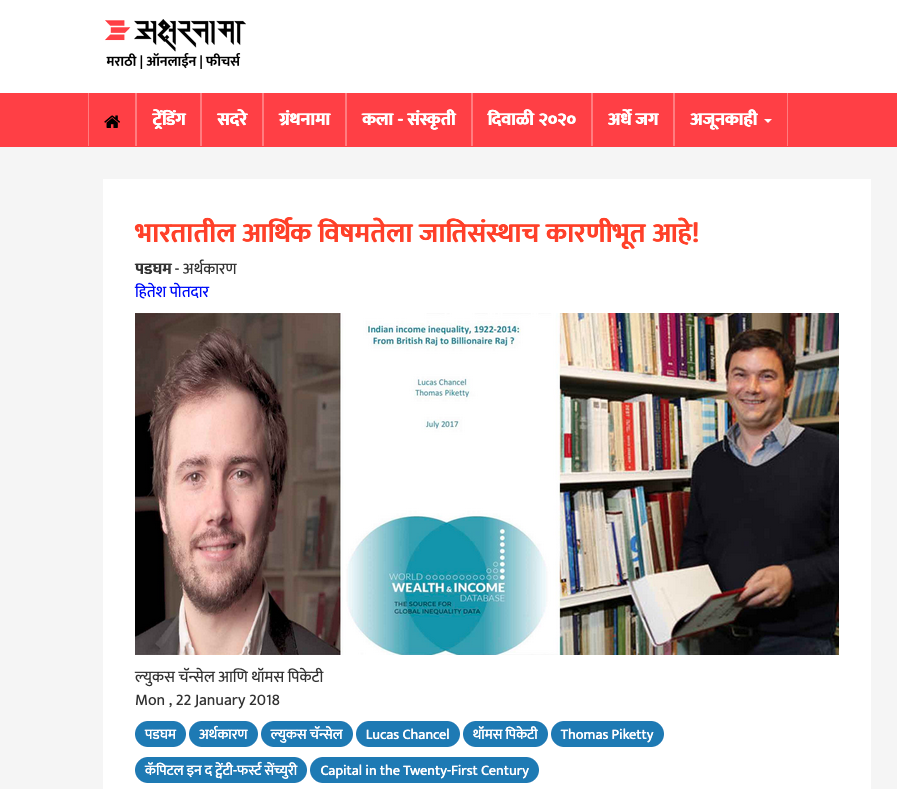
भारतातील आर्थिक विषमतेला जातिसंस्थाच कारणीभूत आहे!
अक्षरनामा (Mon , 22 January 2018)
पडघम – अर्थकारण
https://www.aksharnama.com/client/article_detail/1711
भारताचे दुर्दैवंच आहे की, आपले प्रश्न आपल्यालाच सांगायला बाहेरची व्यक्ती लागते. (नाहीतरी आपणच प्रश्न उपस्थित केले तर अँटी-नॅशनल ठरतो). यंदा निमित्त झालं अर्थतज्ज्ञ थॉमस पिकेटी आणि लुकास चान्सेल यांचं. नुकताच या जोडगोळीनं भारतातील विषमतेवर अहवाल काढला. ज्याची चर्चा बऱ्यापैकी माध्यमांमध्ये झाली. परंतु अहवाल जसा आहे तशाच चौकटीबद्ध रचनेत त्याची चर्चा झाल्याचे दिसून आले. त्याचे अर्थ-अन्वर्थ, चिकित्सात्मक विश्लेषण फार कमी प्रमाणात आपण केले. आणि तसे विश्लेषण होणे हे क्रमप्राप्त होते, कारण कितीही बाहेरच्या व्यक्तींनी आपले प्रश्न आपल्यालाच सांगण्याचा प्रयत्न केला तरी खरी ग्राउंड-झिरो परिस्थितीची जाण असणे आणि त्यातून निष्कर्ष काढणे हे आपणाशिवाय कुणालाही त्याप्रकारे जमणारे नाही.
थॉमस पिकेटीने काही वर्षांपूर्वी ‘कॅपिटल ऑफ ट्वेंटीफर्स्ट सेंच्युरी’ या नावाने ग्रंथ लिहून जगातील आर्थिक विषमता ही कशा भीषण स्वरूपात वाढली आहे हे जगासमोर मांडले. त्यांनतर पिकेटी ‘मॉडर्न कार्ल मार्क्स’ म्हणूनही प्रसिद्ध झाला. जागतिकीकरणाच्या काळात भांडवलशाही ही जगाला कशा प्रकारे आर्थिक विषमतेच्या खाईत घेऊन जात आहे, याचे विश्लेषण त्याने आपल्या पुस्तकात मांडले. त्यानंतर त्याचा भारत दौराही झाला. ज्यात त्याने भारतातील आर्थिक विषमता ही भारतासाठी कशी अधिक चिंतेची बाब आहे आणि त्याचे भविष्यात सोसावे लागणारे परिणाम, यातून मार्ग काढत कशी वाटचाल असावी यावर पिकेटीने आपली मते मांडली. त्याला विरोध करण्याचा केविलवाणा प्रयत्न हा मोदीधार्जिणे अर्थतज्ज्ञ बिबेक देबरॉय यांच्याकडून करण्यात आला, पण तो उथळ होता हेही लवकरच सिद्ध झाले.
पिकेटी व चान्सेल आणि क्रेडिट सुईज यांच्या अहवालातील धक्कादायक निष्कर्ष
भारतातील अव्वल १ टक्के श्रीमंत लोकसंख्येचा एकूण संपत्तीमधील वाटा २००० मध्ये ३६.८ टक्के होता, तो क्रमाक्रमाने वाढत जाऊन २०१६ मध्ये ५८.४ टक्के इतका झालेला आहे. ज्यात १९९१च्या आर्थिक सुधारणानंतर सातत्याने व जास्त वेगाने वाढ झाल्याचे दिसून येते. जसे अव्वल १० टक्के श्रीमंत लोकसंख्येचा एकूण संपत्तीतील वाटा २०००मध्ये ६५.९ टक्के होता, तो क्रमाक्रमाने वाढत जाऊन २०१६मध्ये ८०.७ टक्के इतका झालेला आहे. त्याचबरोबर, २०००–२०१६ या काळात, भारतातील एकूण संपत्तीमध्ये सुमारे १६६ टक्के वृद्धी झालेली आहे.
ही सगळी आकडेवारी तर धक्कादायक आहेच, मात्र यातील सर्वाधिक वंचित हे अनुसूचित जाती व जमातीमधील आहेत आणि त्यातही ग्रामीण भागातील आहेत, असा निष्कर्ष आपण सामाजिक, आर्थिक व जाती जनगणना अहवाल-२०११ यातील माहिती व पिकेटीच्या अहवालातील विश्लेषण दोघांचे समांतर गुणोत्तर लावल्यास काढता येतो.
आर्थिक विषमता व जातिसंस्था यांतील संबंधांची कारणमीमांसा
आर्थिक विषमतेविषयी बोलताना आर्थिक वर्गासकट जातीसंस्थेचाही विचार व्हायला हवा. ज्यामुळे लोकांचे बहुविध आर्थिक-सामाजिक शोषण ठळकपणे दिसण्यास मदत होते. कारण इतिहासातील वर्णव्यवस्थेमधूनच आनुवंशिक/वारसा व्यावसायिक वर्गसंस्था (Hereditary Occupational Class System) उदयास आलेली दिसते. जसे चांभार समाजातील बहुतांश लोकांनी चपलांचाच व्यवसाय करावा, लोहाराने लोखंडाचाच, सोनाराने सोन्याचाच. परंतु इतर बहुजन वर्गात पौराहित्य, राष्ट्ररक्षण वर्ष परंपरागत पद्धतीने होताना दिसत नाही. इथे मात्र आर्थिक विविधता दिसून येते. याच वर्गाने इतिहासापासून आजतागायत वंचितांनी केलेल्या कामाची, श्रमाची मूळ किंमत (Full Labour-value) पूर्ण स्वरूपात दिल्याचे कुठेही आढळून येत नाही. उदाहरणार्थ, कितीही दर्जा सारखा असला तरी साध्या व्यवसायिकांपेक्षा ‘गुच्ची’ ब्रॅण्डच्या चपलेलाच जास्त भाव दिला जातो. परंतु वस्तुमान-गरिबीचा विचार वर्णव्यवस्थेतून निर्माण झालेल्या जातिव्यवस्थेचे स्वरूप लक्षात न घेता झाल्याचे दिसून येते. अर्थात वर्णव्यवस्थाही अन्यायीच होती. यातच भर घालून जागतिकीकरण झालेल्या भांडवलशाही व्यवस्थेत आजही इतर बहुजन वर्ग ७० टक्के भांडवलावर मक्तेदारीठेवतो. म्हणजे जागतिकीकरणाचाही फायदा हा वंचितांना कुठेही झालेला आढळत नाही कारण भांडवलाचे जागतिकीकरण झाले पण श्रमाचे व श्रमिकांचे नाही. आता विचार करा, अशा व्यवस्थेत मोठे कोण होणार? भांडवलावर मक्तेदारी कुणाची?
कमाईच्या उत्पन्नापेक्षा वारसा हक्काने मिळणाऱ्या संपत्तीचे अर्थव्यवस्थेतील प्रमाण वाढत जाते, आणि आर्थिक विषमता मागच्या पिढीकडून पुढच्या पिढीकडे हस्तांतरित होत जाते, ज्यास पिकेटी ‘पैतृक भांडवलशाही’ (patrimonial capitalism) असे संबोधतो. म्हणजेच जातीसंस्थेला सरसकट मुळापासून उखडून न फेकल्यासपुढे पुरवठ्याच्या तुटवड्यामुळे मरणारे वंचितच असतील.
दुसरीकडे परंपरागत निर्वाहावर विसंबून असणाऱ्या अर्थव्यवस्थाही कोलमडताना दिसून येतात. याचा अर्थ असा होत नाही की, जातीचा प्रभाव कमी होत आहे. फरक एवढाच की तो इतर परिमाणांमधून दिसून येतो. नव्याने निर्माण झालेल्या सामाजिक-आर्थिक व्यवस्थेतून त्याने नवीन स्वरूप घेतल्याचे दिसून येते. त्याने नवीनजाती-व्यवसाय हित-जाळे (caste-occupation nexus) तयार झाले आहे.
अब्राहम मास्लोची गरजांच्या पदानुक्रमची थेअरी व जातीव्यवस्था
अभियांत्रिकीच्या तिसऱ्या वर्षात असताना व्यवस्थापनशास्त्राच्या विषयात एक थेअरी होती अब्राहम मास्लोची- ‘थेअरी ऑफ मोटिवेशन’. त्यानुसार मास्लो मानवी गरजांना पिरॅमिड स्वरूपात पाच भागांत क्रमाने विभागतो. शेजारी दिलेल्या आकृतीत दिल्याप्रमाणे : पिरॅमिडच्या खालच्या भागापासून वर जाताना लोकसंख्येचे प्रमाण कमी-कमी होत जाते. खालून-वर जाताना मास्लो म्हणतो, माणसाला अस्तित्वानंतर लगेच सर्वप्रथम गरज असते ती अन्न, वस्त्र-निवाऱ्याची म्हणजेच प्राथमिक गरजा. त्यानंतर तो पैसे वाचले तर दुसऱ्या स्थराला पोहचून भविष्यातील सुरक्षेसाठी मागणी करू लागतो. म्हणजेच पोलिसी, इन्शुरन्सेस इत्यादी. त्यानंतर त्याची समाजात ओळख प्रस्थापित व्हावी यासाठी आटापिटा चालतो. या सगळ्यांतूनही पैसे वाचले तर तो चैनीच्या आणि ऐषारामीच्या वस्तूंची मागणी करू लागतो. याचाच अर्थ काल अल्टो गाडी असेल तर त्याला आज होंडा सिटी हवी आणि शेवटाला तो फक्त आत्मसंतुष्टीसाठी काम करतो.
आता आपण एका उद्योजकाच्या दृष्टिकोनातून विचार करूयात. समजा एक अशी व्यवस्था ज्यात सगळे आर्थिकरीत्या समान आहेत, पण याच व्यवस्थेत जातिव्यवस्थाही आहेच. सर्व लोकांनी सुरुवातीला प्राथमिक गरजांचीच मागणी करणे स्वाभाविक आहे. मी उद्योजक म्हणून अशा प्राथमिक वस्तूंची निर्मिती व पुरवठा करण्यास सुरुवात केली. त्यातील काही लोकांच्या या गरजा पूर्ण होऊन त्यासकट त्यांनी सुरक्षाविषयक सोयींची मागणी करण्यास सुरुवात केली. माझा उद्योजक म्हणून फायदा सुरक्षाविषयक सुविधा पुरवण्यातच आहे, म्हणून मी प्राथमिक गरजांची निर्मिती सोडून वरील पातळीच्या सुविधा पुरवण्यास सुरुवात केली. मग त्यातीलही काही लोकांची बढती होऊन ऐषारामीच्या सेवांची मागणी सुरू झाली. मी पुन्हा पूर्वीचा उद्योग सोडून या सेवांची पूर्तता करण्यास सुरूवात केली कारण यात नफा फारच जास्त आहे. परंतु पिरॅमिडमध्ये दाखवल्याप्रमाणे आणि व्यवस्थेत जातिव्यवस्था असल्यामुळे फारच कमी म्हणजेच ५० टक्क्यांपेक्षा कमी लोक वरील पातळीवर स्थलांतरित होतात. असे होत होत ऐषारामाची मागणी करणारे फारच तुरळक असतात. परंतु त्यांच्या सेवांच्या मागणीची पूर्तता करण्यासाठी मी जास्तीत जास्त संसाधने ज्यांचा मुळातच तुटवडा आहे, अशी संसाधने ऐषारामीच्या सेवांची मागणी पूर्ण करण्यासाठी वापरतो. उदाहरणार्थ जी लोक अजूनही पिरॅमिडच्या तळाशी आहेत त्यांच्यासाठी अन्न शिजवायला जी भांडी लागणार आहेत, त्यासाठी लागणारे सर्व स्टील मी मर्सिडीजच्या निर्मितीसाठी वापरले.
अशा प्रकारे संसाधने चैनीच्या गोष्टींच्या निर्मितीकडे वळवून परिणामी रसातळाला असणारे अजून जास्त गरिबीत जगतात. आणि आर्थिक विषमता वाढून जगणे अवघड होऊन बसते. विसरता कामा नये या व्यवस्थेत जातिसंस्था होती!
निश्चलनीकरण आणि त्याचे सामाजिक परिणाम
निश्चलनीकरणाचा फटका जो बसला तो असंघटित, अनौपचारिक क्षेत्रालाच. ज्यात देशातील ८० टक्क्यांपेक्षा जास्त बहुजन वर्ग अजूनही काम करतो. उच्च वर्गाला याचा फरक पडलाच नाही असे नाही पण त्यांच्याकडे यातून बाहेर येण्यासाठीची साधने आणि मार्ग होते. ‘निश्चलनीकरण’ (Digitilisation) ज्याला आपण इथे ‘द्विजी’ टीलायझेशन म्हणूयात- याच्या साधनांवरही उच्च वर्गीयांचीच मक्तेदारी जास्त आढळून येते. यामागे वर्षानुवर्षांपासून शिक्षणापासून वंचित ठेवले गेल्याचा आरोपही जातीसंस्थेवर होऊ शकतो. उच्चवर्गाला ‘द्विज’वर्ग असेही म्हटले जायचे. (पण याला योगायोगच म्हणूयात). पुरुषसूक्तात म्हटल्याप्रमाणे उच्च वर्ग शरीराचा वरचा भाग म्हणजे डोके (मेंदू) येतो, ज्याची मक्तेदारी ही बौद्धिक श्रमावर असते. म्हणजेच आजची softwareची मक्तेदारी (‘अर्थात’ paytm किंवा अन्य Digital wallets वापरणे) आणि इतर वर्गांना पायाची उपमा दिली जाते; ज्यांचे काम बहुतांशी शरीरश्रमात आहे (ज्यांच्याकडे आजही स्मार्टफोन्सची वानवा आहे.). यानुसार सगळ्यात जास्त फटका वंचितांनाच बसावा हे निश्चित. म्हणूनच कुठलीही योजना आणण्यापूर्वी भारताची सामाजिक-आर्थिक संरचना व सरकारी योजनेचे त्या संरचनेवर होणारे परिणाम लक्षात घ्यायला हवेत, या स्वातंत्र्यापासून चालत आलेल्या प्रथेला धाब्यावर बसवूनच निश्चलनीकरणाची योजना आणल्याचे दिसते. यातून तुमचे-आमचे financial-social inclusionचे उद्दिष्ट्य कसे साध्य होणार?
सामाजिक, आर्थिक आणि जाती जनगणना-२०११ आणि हादरून सोडणारी आकडेमोड
भारतात अनुसूचित जाती व जमातींमधील ५ टक्क्यांपेक्षा कमी घरे अशी आहेत, ज्यांचे मासिक उत्पन्न दहा हजारांपेक्षा जास्त आहे. म्हणजे ९५ टक्क्यांपेक्षा जास्तघरांना आजच्या काळातील प्राथमिक गरजा (शिक्षण आणि आरोग्य) ‘खासगी’ शाळांत, कॉलेजांत, इस्पितळांत भागवणे परवडणारे नाही. आणि तरीही बहुतांश प्राथमिक उपचार केंद्रांना ताळे दिसतात, ज्यांना गंज चढायलाही सुरुवात झालीये. किंवा तिथे डॉक्टर्स नाहीत किंवा असतीलच तर त्यातलेही अधिक हे बोगस आहेत. इतर सोयी-सुविधा तर सोडूनच द्याव्यात.
अनुसूचित जाती-जमातींमधील फक्त १३ टक्के लोक आज पदवीधर आहेत. आणि आपण आरक्षण काढून टाकण्याची मागणी करताना आज दिसतो. यातीलच ७० टक्के लोकांकडे आज जमीन नाही. याचाच अर्थ जमीन विकून पोरा-पोरींना शिकवणे जमणारे नाही. (म्हणजे दावावर लावायला शरीराखेरीज काहीच नाही. कार्ल मार्क्स म्हणतो- We have nothing to loose but the chains. Its high time for revolution. आपल्याकडे गमावण्यासाठी (वर्षापरंपरागत) साखळ्यांशिवाय काहीही नाही. हीच क्रांतीची वेळ आहे. सहज आठवलं म्हणून).
आजही भारतात दीड लाखांपेक्षा जास्त लोक मॅन्युअल स्कॅव्हेंजिंग (मैला व विष्ठा वाहून नेण्याची प्रथा) मध्ये काम करतात. जिथे संविधानातील कलम २१ला खीळ बसते. ज्यानुसार प्रत्येक व्यक्तीला प्रतिष्ठा जपून (Right to Dignity) जगण्याचा अधिकार आहे. त्यातही महाराष्ट्र अग्रेसर. जवळपास साठ हजार आपल्याच राज्यात या क्षेत्रात आहेत.
२०१५ मध्ये भारतात ५ वर्षांखालील मुलांचे मृत्यूचे सर्वाधिक प्रमाण आढळून येते. त्यातीलही ५० टक्क्यांपेक्षा अधिक हे अनुसूचित जाती-जमातींमधील आढळून येतात. पुन्हा ५० टक्क्यांपेक्षा जास्त लोकांचे बॉडी-मास निर्देशांक १८.५ खाली आहे जे की, जागतिक आरोग्य संघटनेनुसार तीव्र-कुपोषण मानले जाते.
एवढी भीषण परिस्थिती असतानाही काही लोक व सरकार, व्यवस्था जातिसंस्थेचे अप्रत्यक्षरीत्या समर्थनच करत असतील तर ती व्यवस्था मुळासकट उखडून फेकायला कारणे व निश्चित वेळ कशाला हवी?
……………………………………………………………………………………………………………………………
ल्युकस चॅन्सेल व थॉमस पिकेटी यांच्या शोधनिबंधासाठी पहा –
Indian income inequality, 1922-2014: From British Raj to Billionaire Raj?
http://wid.world/document/chancelpiketty2017widworld/
……………………………………………………………………………………………………………………………
लेखक हितेश पोतदार विविध महाविद्यालयं आणि स्पर्धापरीक्षा केंद्रांत राज्यशास्त्र आणि अर्थशास्त्राचे अध्यापन आणि अध्ययन करतात.
hdpotdar199@gmail.com
……………………………………………………………………………………………………………………………
Copyright www.aksharnama.com 2017. सदर लेख अथवा लेखातील कुठल्याही भागाचे छापील, इलेक्ट्रॉनिक माध्यमात परवानगीशिवाय पुनर्मुद्रण करण्यास सक्त मनाई आहे. याचे उल्लंघन करणाऱ्यांवर कायदेशीर कारवाई करण्यात येईल.