Author: hiteshpotdar

  • अनुभव, ज्ञान आणि राजकीय कृतीविषयी काही नोंदी

    अनुभव, ज्ञान आणि राजकीय कृतीविषयी काही नोंदी

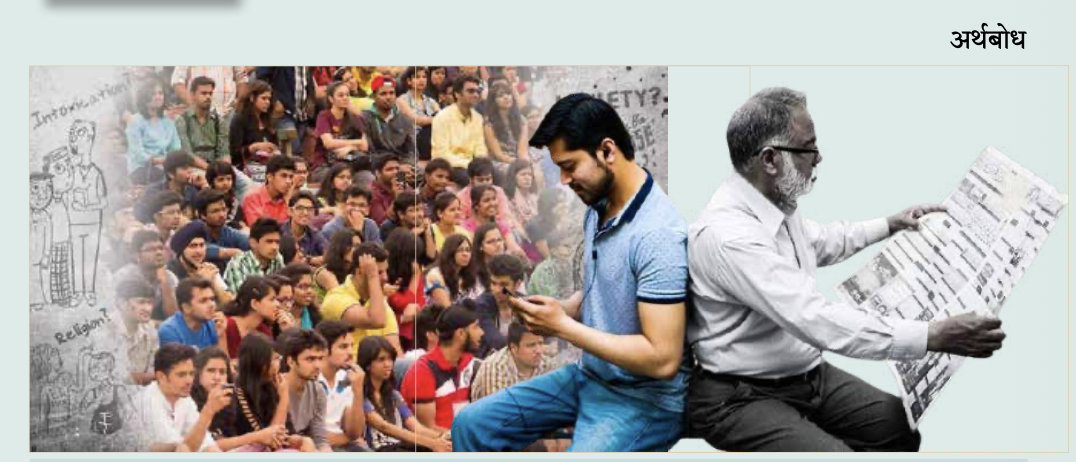
    काही दिवसांपूर्वी मी आणि माझे काही विद्यार्थी पिढ्यांमधल्या अंतराविषयी बोलत होतो. नेमका विषय कुठून सुरू झाला हे आता आठवत नाही, पण बोलता बोलता एक नेहमीचा प्रश्न समोर आला. प्रत्येक पिढीला आपल्या पुढची पिढी थोडी कमी कणखर, कमी सहनशील, जास्त अस्थिर किंवा जास्त अपेक्षा ठेवणारी का वाटते? “आमच्या काळात एवढं नव्हतं”, “आम्ही एवढ्या अडचणीतही केलं”, “आजच्या मुलांना सगळं सहज मिळतं”, “एका नोकरीत टिकत नाहीत”, “ नव्या पिढीला धीर नाही”, “सगळ्यांना लगेच समाधान हवं”. ही वाक्यं आपल्या आसपास सतत फिरत असतात. आणि अर्थातच आमच्या पिढीचीही उत्तरं तयार असतात. “तुम्हाला आमचं जग समजत नाही”, “तुमच्या काळातली स्थिरता आणि सुरक्षितता आता नाही”, “तुम्ही ज्या नियमांनी जगलात ते नियम आता लागूच होत नाहीत.” गंमत अशी की दोन्ही बाजू स्वतःच्या अनुभवाला प्रमाण मानत असतात. प्रत्येकाला आपला अनुभव इतका स्वाभाविक वाटतो की दुसऱ्याचा अनुभव अपवाद वाटू लागतो. त्या संभाषणात मला पहिल्यांदा फार साध्या पद्धतीने हा प्रश्न जाणवला की आपण अनुभवाला नेमकं काय स्थान देतो? आपण अनुभवातून शिकतो हे खरं पण आपला अनुभव कोणत्या जगात, अवकाशात, काळात घडला, हे न समजता आपण त्यातून मिळालेलं ज्ञान दुसऱ्यावर लादू शकतो का? 

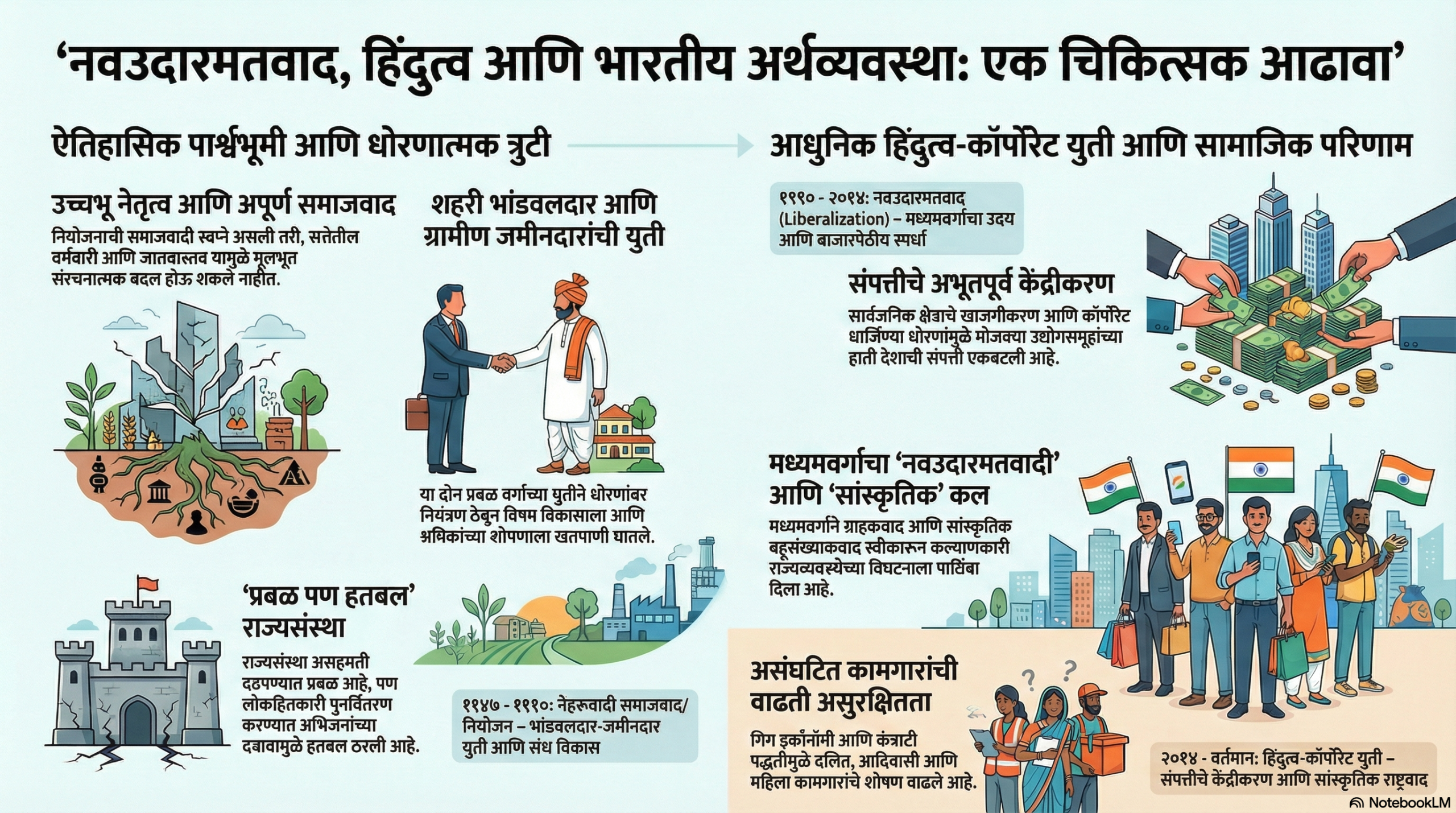
    माझा जन्म १९९३चा. म्हणजे भारताच्या अर्थव्यवस्थेने १९९१नंतर घेतलेल्या वळणाचा मी प्रत्यक्ष साक्षीदार नसलो तरी त्याचे परिणाम भोगणार सहभागी नक्कीच आहे. आणि म्हणून मला त्या बदलांविषयी नंतर वाचावं लागलं. पण माझं बालपण, शिक्षण, करिअरची कल्पना, शहरांविषयीचं आकर्षण, नोकरीविषयीची असुरक्षितता, परदेशात जाण्याची इच्छा, स्पर्धा, संगणक, मोबाईल, आणि इंटरनेट हे सगळं त्या बदलांनी आधीच आकार घेत असलेल्या जगात घडलं. माझ्या आई-वडिलांच्या पिढीसाठी एक्याण्णवनंतर ज्या गोष्टी “नवीन” म्हणून पुढे आल्या, त्यापैकी अनेक माझ्यासाठी जन्मतःच सामान्य होत्या. त्यांच्या पिढीच्या कल्पनेत कायम-स्वरूपाची नोकरी, पगारात नियमित वाढ, एकाच संस्थेत दीर्घकाळ टिकून राहणं, काही वर्षांनी स्वतःचं घर घेणं, मुलांनी शिक्षण पूर्ण करून “स्थिरस्थावर” होणं यांना एक विशिष्ट सामाजिक वास्तव आधार देत होतं. आजही त्या अपेक्षा मोठ्या प्रमाणावर टिकून आहेत, पण त्यांना आधार देणारं जग बदललं आहे. शिक्षण वारेमाप फोफावत गेलं, पण त्यातून नोकरीची हमी निर्माण झालीच असं नाही. शहरं फोफावली, पण घर परवडणं कठीण झालं. तंत्रज्ञानाने वेळ वाचवला असं सांगितलं गेलं, पण काम आणि उरलेलं आयुष्य यांच्यातील सीमाच धूसर झाली. निवडी वाढल्या, पण त्याच वेळी सतत तुलना, स्वतःचं कर्तुत्व मोजणारी मापदंडे आणि स्वतःला सिद्ध करण्याची सक्तीही वाढली. म्हणूनच मला पिढ्यांमधला संघर्ष वैयक्तिक स्वभाव-संघर्षासारखा वाटत नाही. तो अनेकदा वेगवेगळ्या भौतिक जगांतून आलेल्या अनुभवांचा संघर्ष असतो असे मत बनत गेले. कारण माझ्या तत्त्वज्ञानाचा पाया हा माझ्या व भोवतालच्या लोकांच्या दैनंदिन भौतिक संघर्षातून घडत गेला.

    इथे मला “आमच्या काळात…” या वाक्यात दडलेलं गृहीतक महत्त्वाचं वाटतं. ते असं की कालचा काळ आणि आजचा काळ मोजण्यासाठी एकच पट्टी वापरता येते. एखादी तरुणी वारंवार नोकरी बदलत असेल तर तिला स्थैर्य नको आहे म्हणून ती तसं करते आहे का, की तिच्यासमोर उपलब्ध असलेल्या नोकऱ्याच अस्थिर आहेत? एखादी व्यक्ती तीस-पस्तिसाव्या वर्षीही स्वतःचं घर घेऊ शकत नसेल किंवा भाडेही परवडत नसेल तर तिच्यात महत्त्वाकांक्षा कमी आहे म्हणून, की उत्पन्न आणि घरांच्या किमती यांचं प्रमाणच बदललं आहे? सतत थकलेले शरीर व मन घेऊन हिंडणारे, अस्वस्थ किंवा भविष्यासंदर्भात साशंक असलेले तरुण “कमी सहनशील” आहेत म्हणून, की त्यांच्या आयुष्याचा मोठा भाग अनिश्चित रोजगार, महाग शिक्षण, वाढती शहरी किंमत, कर्ज, स्थलांतर आणि प्रत्येक क्षणी स्वतःला अधिक ‘उत्पादक/कार्यक्षम’ करून दाखवण्याच्या दबावात जातात म्हणून? हे प्रश्न विचारण्याचा अर्थ प्रत्येक वैयक्तिक समस्येचा दोष व्यवस्थेवर ढकलणे असा नाही. उलट, प्रश्न एवढाच आहे की व्यक्तीच्या निवडींना, इच्छांना आणि अपयशांना आकार देणाऱ्या परिस्थितींना आपण विश्लेषणातून बाहेर ठेवू शकतो का? दुःखाची तुलना करण्यापेक्षा दुःख निर्माण करणाऱ्या परिस्थितींची तुलना करणं अधिक उपयोगाचं असावं.

    यातून मला आणखी एक गोष्ट जाणवते. कोणत्याही पिढीचं “सामान्य” हे कायमचं सामान्य नसतं. एका पिढीला जो बदल वाटतो, पुढच्या पिढीला तोच बदल जन्मतःच मिळालेली परिस्थिती वाटतो. उदाहरणार्थ, आमच्या आधीच्या पिढीने उदारीकरण, खासगीकरण, माहिती तंत्रज्ञान, बाजाराचा वाढता हस्तक्षेप हे बदल म्हणून अनुभवले. आमच्या पिढीने त्यांच्यातच स्वतःला घडवलं. आता आमच्यापेक्षा लहान पिढीसाठी सोशल मीडिया, प्लॅटफॉर्म अर्थव्यवस्था, कृत्रिम बुद्धिमत्ता, वर्क-फ्रॉम-होम, सतत डिजिटली एक्टिव असणं किंवा एका शहरात राहून दुसऱ्या देशातील संस्थेसाठी काम करणं यात काहीच विलक्षण नसेल. या प्रत्येक बदलासोबत नाती, आकांक्षा, कामाविषयीची कल्पना, वेळेची जाण, स्वतःविषयीची अपेक्षा यांचाही अर्थ बदलतो. म्हणून पिढीचा प्रश्न केवळ वयाचा प्रश्न राहत नाही. तो अलगत इतिहासाचा प्रश्न बनतो. आपण कोणत्या काळात जन्मलो, कोणत्या संस्थांनी आपल्याला घडवलं, कोणत्या बाजारव्यवस्थेत काम केलं, कोणत्या तंत्रज्ञानाशी आपली पहिली ओळख झाली, कोणत्या प्रकारच्या असुरक्षिततेला आपण सामान्य मानायला शिकलो. या सगळ्यांतून आपली अनुभवाची चौकट तयार होत जाते.

    म्हणूनच मला अनुभवाविषयीची पहिली शंका इथेच येते. अनुभव खरा असतो, पण तो स्वतःच स्वतःचा अर्थ सांगतो का? एखाद्या पिढीने अधिक कष्ट केले असतील, पण त्या कष्टांचा अर्थ काय होता, त्यातून कोणत्या संधी उघडत होत्या, कोणत्या बंद होत होत्या, हे न समजता केवळ “आम्ही सहन केलं” एवढ्यावरून पुढच्या पिढीचं मोजमाप करता येईल का? आणि उलट, आमच्या पिढीला आपल्या अस्थिरतेचा अनुभव तीव्रतेने येतो म्हणून त्या अनुभवाचे कारण आपल्याला आपोआपच समजते का? कदाचित नाही. कारण अनुभव हा घटनांची साधी गोळाबेरीज नसते. तो विशिष्ट काळात, विशिष्ट सामाजिक संबंधांत, विशिष्ट जागी उभ्या असलेल्या व्यक्तीचा जगाशी असलेला संबंध आहे. म्हणूनच एका व्यक्तीचा अनुभव दुसरीला जसाच्या तसा मिळू शकत नाही. पण त्याला निर्माण करणाऱ्या जगाचा शोध घेता येतो. आणि कदाचित दुसऱ्या पिढीला समजून घेण्याची सुरुवातही तिथूनच होते. तिच्या अनुभवाशी सदैव सहमत होण्यात नसली तरी त्या अनुभवाला शक्य करणाऱ्या परिस्थितींना समजून घेण्याच्या प्रयत्नातून ती शक्यता निर्माण होते.

    इथून पुढे मग प्रश्न पिढ्यांतील मतभेदांच्या पलीकडे जातो. जर अनुभव स्वतःच काळ, अवकाश, अंतर आणि सामाजिक संबंधांनी घडत असेल, तर अनुभवातून ज्ञान कसं तयार होतं? आपण पाहिलेलं, सोसलं किंवा अनुभवलं म्हणून त्या गोष्टीचं कारणही आपल्याला सहज कळतं का? की अनुभव हा ज्ञानाचा आरंभ आहे, शेवट नाही? मला हा प्रश्न महत्त्वाचा वाटतो, कारण आपल्या रोजच्या जगण्यात आपण अनुभव आणि ज्ञान यांना सहज एकच मानतो. आणि आलटून-पालटून संज्ञा वापरतो. “मी पाहिलंय”, “मी जगलोय”, “मला माहिती आहे” ही तीन विधानं आपण अनेकदा एकाच अर्थाने वापरतो. पण कदाचित त्यांच्यातच पुढच्या चर्चेचा सगळा ताण दडलेला आहे.

    काळ, पिढी आणि अनुभव

    अनुभव आणि ज्ञान यांच्यातला फरक मला उशिरा समजू लागला. पण तो वयपरत्वे मी पुढे सरकलो म्हणून समजू लागला असेही नाही. आयुष्यात एखादी घटना घडते, आपण तिच्यातून जातो, कधी त्रास सहन करतो, कधी त्यात यशस्वी होतो, आणि नंतर सहज म्हणतो, “मला माहीत आहे, मी अनुभवलंय.” पण खरंच एवढ्यावरून आपल्याला त्या घटनेचं ज्ञान झालेलं असतं का? एखाद्या व्यक्तीची नोकरी जाते. त्या क्षणी तिचा अनुभव अगदी खरा असतो. भीती, अपमान, राग, काळजी, पुढे काय होणार याची अनिश्चितता चिकटून पुढ्यात येते. पण त्या अनुभवाचा अर्थ ती व्यक्ती वेगवेगळ्या प्रकारे लावू शकते. “मी पुरेसा सक्षम नव्हतो”, “माझा वरिष्ठ माझ्याविरुद्ध होता”, “कंपनीने चुकीचा निर्णय घेतला”, किंवा काही काळानंतर कदाचित त्याला जाणवेल की त्याच्यासोबतच त्याच्या क्षेत्रातल्या अनेकांच्या नोकऱ्या गेल्या, कामाचं स्वरूप बदललं, कंत्राटीकरण वाढलं, एखादी तांत्रिक पुनर्रचना झाली किंवा खर्च कमी करण्यासाठी लोकांना कमी करण्यात आलं. घटना तीच असली तरी तिच्याबद्दलचं ज्ञान बदलत राहतं. त्यामुळे अनुभव खोटा नसतो, पण अनुभवाचा तात्काळ अर्थ हा त्या अनुभवाच्या कारणांचा पूर्ण उलगडा असेलच असं नाही.

    ही गोष्ट आपल्या अगदी रोजच्या आयुष्यात दिसते. एखादा डिलिव्हरी कामगार म्हणतो की त्याला पूर्ण-वेळ नोकरीपेक्षा ह्या गिग-क्षेत्रात जास्त स्वातंत्र्य आहे, कारण डोक्यावर मॅनेजर नाही. तो लॉग-इन कधी करायचं हे स्वतः ठरवतो. तो अनुभव नाकारण्यात काही अर्थ नाही. पण त्याच वेळी त्याला कोणतं काम मिळेल, कोणत्या अंतरासाठी किती पैसे मिळतील, रेटिंग किती आहे, मागणी कमी-जास्त झाली तर उत्पन्नात काय होईल, वाहनाचा आणि इंधनाचा खर्च कोण उचलतो, हेही त्याच्या अनुभवाचाच भाग आहे. पहिल्या नजरेत “स्वातंत्र्य” किंवा “लवचिकता” म्हणून दिसणाऱ्या गोष्टीतून थोडं मागे सरकल्यावर नियंत्रणाचं वेगळंच रूप दिसू शकतं. घरकामाच्या क्षेत्रातही मला हे वारंवार जाणवलं. स्नॅबीट किंवा इन्स्टाहेल्प मार्फत एका घरात काम करणाऱ्या स्त्रीचा अनुभव फक्त त्या घरातल्या मालकिणीशी किंवा कुटुंबाशी असलेल्या नात्यात दिसतो. पण त्या स्त्रीचा पूर्ण दिवस, ती किती घरांत जाते, किती चालते, कोणत्या वस्तीत राहते, कोणत्या वेळी प्रवास करते, कोणत्या जातीय किंवा धार्मिक भेदांना सामोरं जाते, घरात तिच्यासाठी पाणी किंवा शौचालय उपलब्ध आहे की नाही, याकडे पाहिलं की आधी वैयक्तिक वाटणारी गोष्ट मोठ्या सामाजिक संबंधांचा भाग बनते. त्यामुळे अनुभवाची किंमत कमी होत नाही तर उलट त्याचा आशय अधिक गहन होत जातो.

    कदाचित इथेच ‘फक्त अनुभव’ आणि ‘फक्त सिद्धान्त’ या दोन्हींची मर्यादा दिसते. ज्या व्यक्तीने काही अनुभवलंच नाही तिने दूर बसून एब्स्ट्रक्ट संकल्पनांच्या आधारे सगळं जाणते, असा दावा करणं सुद्धा हास्यास्पद वाटते. पण स्वतःच्या अनुभवाला जगाचं संपूर्ण ज्ञान समजणंही तितकंच अपुरं आहे. आपल्या हातातलं वास्तव नेहमी तुकड्यांत येतं. आपण एखादं संभाषण ऐकतो, अन्यायाचा प्रसंग पाहतो. स्वतः काही सोसतो, काही गमावतो, काही जिंकतो. त्या तुकड्यांना एकमेकांशी जोडून त्यामागचे सामाजिक संबंध शोधावे लागतात. कार्ल मार्क्स आणि फ्रेडरिक एंजेल्स यांनी ‘द जर्मन आइडियोलॉजी’ या ग्रंथात इतिहास समजून घेण्याची सुरुवात ‘रियल प्रीमाइसेस’ पासून करावी म्हणजेच प्रत्यक्ष व्यक्ती, त्या व्यक्ती ज्या क्रिया-प्रक्रियांत आपलं श्रम व्यस्त करत आहेत त्या आणि त्यांना ज्या निश्चित परिस्थितीत जीवन जगावं लागतं त्या परिस्थितींपासून करावी असं म्हटलं होतं. त्यांच्या दृष्टीने विचारांची निर्मिती प्रत्यक्ष जीवनापासून वेगळी होणे हे कदापीही शक्य नसते. ‘प्रॅक्टिस फ्रॉम आयडियाज’ (कल्पनेतून निर्माण होणारी कृती) समजावून घेण्याऐवजी ‘फॉर्मेशन ऑफ आयडियाज फ्रॉम रियल प्रॅक्टिस’ म्हणजेच प्रत्यक्ष कृतीतून व भौतिकपरिस्थतीतून निर्माण होणारी कृती समजून घ्यावी लागते. ही गोष्ट मला फार महत्त्वाची वाटते, कारण ती अनुभवाला केंद्रस्थानी ठेवते. पण त्याच क्षणी अनुभवाला अंतिम महत्व देत नाही. रियल प्रॅक्टिस किंवा खरी कृती ही कायम सामूहिक असते. कुठल्याही गोष्टीची किंवा कल्पनेची निर्मिती एका पोकळीत होत नाही. त्या निर्मितीला कायम एनवायरनमेंट म्हणजेच आजूबाजूच्या अवकाश-काळातून निर्माण झालेल्या परिस्थितीतूनच जन्म घ्यावा लागतो. ह्या एनवायरनमेंट मध्ये प्रत्यक्ष अनुभवातून दिसणाऱ्या सजीव-निर्जीव गोष्टी व ज्ञानेंद्रियांतून लगेच न अनुभवता येणाऱ्या गोष्टींचाही समावेश असतो. 

    आपण एखादी गोष्ट पाहतो, तिच्याबद्दल काही निष्कर्ष काढतो आणि मग त्या निष्कर्षानुसार काही करतो. इथूनच ज्ञानाची खरी कसोटी सुरू होते. उदाहरणार्थ, एखाद्या तरुणाला नोकरी मिळत नाही आणि आपण कारण म्हणून त्याच्या ‘कौशल्यांच्या अभावाकडे’ पाहतो. मग उपाय म्हणून आणखी प्रशिक्षण, आणखी प्रमाणपत्र, आणखी ‘स्वतःवर काम कर’ असा सल्ला दिला जातो. काही लोकांना त्याचा उपयोगही होऊ शकतो. पण हजारो लोकांनी नवीन कौशल्यं घेतल्यानंतरही पुरेशा नोकऱ्या निर्माण होत नसतील, तर मूळ गृहीतक कुठेतरी अपुरं आहे हे लक्षात घ्यावं लागतं. ज्ञान फक्त निरीक्षणातून तयार होत नाही. त्यावर आधारलेली कृती प्रत्यक्ष जगात उतरवल्यावर त्याच्या मर्यादा दिसू लागतात. चुकीचा अंदाज, अपयशी प्रयत्न, अनपेक्षित परिणाम, हे सगळं ज्ञानाच्या प्रक्रियेचाच भाग ठरतं. म्हणूनच एखाद्या विचाराची सत्यता फक्त तो तार्किक वाटतो म्हणून ठरत नाही. तर तो वास्तवाशी कसा भिडतो हेही पाहावं लागतं.

    मार्क्स पुन्हा त्याच्या ‘थेसेस ऑन फ्यूअरबाच’ मध्ये हा प्रश्न अत्यंत थोडक्यात आणतो. मानवी विचाराला वस्तुनिष्ठ सत्य आहे की नाही? हा निव्वळ सैद्धान्तिक प्रश्न नसून एक वास्तव, ‘ए प्रॅक्टिकल क्वेस्शन’ आहे. सत्याची वास्तविकता आणि शक्ती माणसाने व्यवहारात सिद्ध करावी लागते. हे तत्त्वज्ञान मला नेहमीच महत्वाचं वाटत आलं आहे. कारण ती ‘विचार’ आणि ‘कृती’ यांना दोन वेगळ्या जगांत ठेवत नाही. आपण आधी पूर्ण ज्ञान मिळवतो आणि मग त्यानुसार कृती करतो, अशी सरळ रेषा नसते. अपूर्ण समजुतीने आपण काही करतो, त्या कृतीचे परिणाम आपल्याला पुन्हा वास्तवाकडे पाहायला भाग पाडतात. त्यातून आधीची समज बदलते आणि मग पुढची कृतीही बदलते. अशा अर्थाने ज्ञान तयार होणं ही सतत चालणारी प्रक्रिया आहे. एकदा काहीतरी ‘कळलं’ की ती प्रक्रिया तिथेच संपत नाही तर ती प्रक्रिया अधिक निरंतर बनते. हाच निष्कर्ष कुठल्याही वैज्ञानिक अभ्यास्पद्धतीचा अंतिम निष्कर्ष असतो आणि म्हणूनच ते विज्ञान ठरते. त्यामुळे कुठली आइडियोलॉजी, प्रभावी व्यक्ती, साधू-संत किंवा अगदी कुठलीही व्यक्ती/कल्पना तुम्हाला सांगत असेल की त्यांना जग कसं चालतं, ते काय आहे हे कळलंय तर ते धादांत खोटं आहे. त्याचे दोनच निष्कर्ष निघू शकतात: एक, त्यांना आपल्या देह-नेणीव-जाणीवेबाहेरील पर्यावरणात काही बदल घडतो हे मान्य नाही (टिपिकल नार्सिसिम), किंवा दोन, त्या व्यक्ती/विचाराला आपल्या विचारांत आलेल्या कुंठितावस्थेविषयी माहीत नाही.

    यामुळे अनुभवाविषयीचा प्रश्न आणखी गुंतागुंतीचा होतो. माझ्या स्वतःच्या अनुभवाला मर्यादा आहेत, पण दुसऱ्याचा अनुभव मी सहज उचलून स्वतःचा करू शकत नाही. जात, लिंग, वर्ग, वर्ण, धर्म, प्रदेश, भाषा किंवा कामाच्या स्वरूपामुळे काही अनुभव काही लोकांच्या आयुष्यात रोजचे असतात, तर इतरांना ते दिसतही नाहीत. एखाद्या दलित स्त्रीला रोजच्या सामाजिक व्यवहारात जाणवणारा भेदभाव मला तसाच अनुभवता येणार नाही. माझ्या सामाजिक स्थानामुळे काही गोष्टी माझ्यासाठी अदृश्य राहू शकतात. म्हणून अशा अनुभवाचं महत्त्व कमी करणं म्हणजे वास्तवाचाच एक भाग कापून टाकणं होईल. पण त्याच वेळी ‘मी अनुभवलं म्हणून त्याचा पूर्ण अर्थ मला माहीत आहे’ असं म्हणणंही मला अवघड वाटतं. कारण अनुभवाला कारण देणारे संबंध अनेकदा त्या क्षणाच्या पलीकडे असतात. एखादी घटना जातीय का आहे? वर्गीय का आहे? लैंगिक श्रमविभागणीशी तिचा काय संबंध आहे? एखाद्या कायद्याने, बाजाराने किंवा संस्थेने ती कशी आकारली आहे? हे प्रश्न विचारण्यासाठी अनुभवातून थोडं बाहेर पडून त्याच्याकडे पाहावं लागतं.

    आणि इथेच विचार किंवा सिद्धान्ताचा उपयोग अधिक जाणवतो. सिद्धान्त म्हणजे अनुभवावर कायम वरून लादलेली चौकट असण्याची गरज नाही. पण तो अनुभवात तात्काळ न दिसणाऱ्या संबंधांचा शोध घेण्याचा मार्ग असू शकतो. एकेका प्रसंगाला दुसऱ्या प्रसंगाशी जोडणं, जे वारंवार घडतं त्यात काही रचना आहे का पाहणं, व्यक्तीची कहाणी तिच्या काळाशी आणि समाजाशी जोडणं, आणि आपल्या स्पष्टीकरणाची पुन्हा व्यवहारात परीक्षा घेणं या प्रक्रियेत अनुभव ज्ञानात रूपांतरित होतो. म्हणून मला अनुभव आणि सिद्धान्त यांच्यात भिंत उभी करणं अवघड वाटतं. अनुभवाशिवाय सिद्धान्त कोरडा होऊ शकतो. पण सिद्धान्ताशिवाय अनुभव स्वतःच्या तात्काळतेत, पोकळीत आणि कुंठितावस्थेत अडकू शकतो. मार्क्स आणि एंजेल्स यांनी ज्या अर्थाने “circumstances make men just as much as men make circumstances” असं लिहिलं, त्यातही हाच दुहेरी प्रवाह आहे. आपण परिस्थितींनी घडतो, पण परिस्थितींवर त्यांना प्रतिसाद म्हणून कृतीही करतो.

    म्हणून अनुभव हा ज्ञानाचा शेवट असूच शकत नाही. उलट अनुभव ज्ञाननिर्मितीची सुरुवात मानावी असं मला अधिकाधिक वाटतं. जग आपल्याला आधी संवेदनांमधून, प्रसंगांमधून, सामाजिक संबंधांमधून भेटतं. नंतर आपण त्याचा अर्थ लावतो, तुलना करतो, प्रश्न विचारतो, संबंध शोधतो आणि काही करून पाहतो. त्या कृतीत आपली समज तग धरते किंवा मोडते. मोडली तर पुन्हा विचार करावा लागतो. ही हालचाल थांबत नाही. आणि कदाचित याच कारणामुळे ‘मी हे अनुभवलंय’ एवढं म्हणणं महत्त्वाचं असूनही अपुरं आहे. पुढचा प्रश्न मग असा उरतो की मी ते कुठून अनुभवलं? कोणत्या ठिकाणी उभं राहून पाहिलं? आणि जागा बदलली की मला दिसणारं वास्तवही बदलतं का?

    अनुभव, ज्ञान आणि त्यांची मर्यादा

    इथे “मी कुठून पाहतो?” हा प्रश्न अनुभवाच्या प्रश्नाइतकाच महत्त्वाचा वाटू लागतो. भौगोलिक व अवकाशीय किनार असणाऱ्या ह्या प्रश्नाला तत्वज्ञानांच्या दृष्टिकोनातून फार कमी तपासले गेले आहे. तत्वज्ञानालाही ‘स्पेस’, अवकाश असतो आणि तत्वज्ञान भूगोल/अवकाशसापेक्ष असते ह्याचा आपल्याला अनेकदा विसर पडतो. उदाहरणार्थ, काही वर्षांपूर्वीपर्यंत भारतात राहून भारतातील एखाद्या घटनेकडे पाहणं आणि आता लंडनमध्ये राहून त्याच घटनेकडे पाहणं. पुन्हा भारतात जाणं, काही महिने तिथे राहणं आणि परत येऊन त्याच घटनांकडे अंतरावरून पाहणं. या हालचालीत माझ्या त्या एकाच घटनेकडे पाहण्याचा दृष्टिकोन कैक पटींनी बदलतो. भारतात असताना अगदी सामान्य वाटणाऱ्या अनेक गोष्टी बाहेरून पाहताना अचानक ठळक दिसू लागतात. पण उलट, लंडनमधून स्पष्ट वाटलेली अनेक स्पष्टीकरणं भारतात परतल्यावर अपुरी पडतात. अंतर काही विशिष्ट संबंधांवर प्रकाश टाकण्याचं काम करतं. तर काही संबंध ह्या हालचालीत अधिक धूसर होत जातात. कारण प्रत्येक वेगळ्या अवकाशातून भौतिक वास्तव बदलते आणि त्यानुसार आपले ज्ञानाविषयीचे आकलन. जवळीक अनुभव अधिक दाट करते, पण रोजच्या सवयीमुळे काही संबंध इतके स्वाभाविक वाटू लागतात की ते नजरेतून सुटतात. त्यामुळे जवळ असणं म्हणजे अधिक सत्य आणि दूर असणं म्हणजे अधिक वस्तुनिष्ठता, या दोन्ही कल्पना सुद्धा मला अपुऱ्या वाटतात. खरा प्रश्न कदाचित “कोणाला जास्त दिसतं?” हा नसून “आपण जिथे उभे आहोत तिथून काय दिसतं आणि काय दिसत नाही?” हा आहे. अनुभव व ज्ञानांच्या मर्यादांचे भान येणं सुद्धा ज्ञाननिर्मितीचाच एक भाग आहे.

    माझ्या स्वतःच्या संशोधनातून हे मला अधिक ठळकपणे जाणवलं. मी माझी पीएचडी लंडनमधून पूर्ण करत असतांना माझा संशोधनविषय मात्र भारतात घडणारी एक प्रक्रिया आहे. असा भारत जो अगोदर वसाहतवाद आणि आता साम्राज्यवादाचा बळी आहे. संशोधनासाठी एखाद्या घरकामगार महिलेशी तिच्या स्वतःच्या घरात बोललो तर तिची कथा त्या घराच्या चौकटीत बसते. काम किती, पगार किती, मालकिणीचं वागणं कसं. पण तिच्या पूर्ण दिवसाच्या हालचालीकडे पाहिलं की तीच कथा बदलते. ती कुठे राहते, किती घरांत काम करते, रोज किती चालते, वाहतुकीवर किती वेळ आणि पैसा खर्च करते, घरी परतल्यावर कोणतं काम तिची वाट पाहत असतं, शहरातल्या कोणत्या भागांत तिला प्रवेश आहे आणि कुठल्या स्थळ-काळातील तिची उपस्थिती समाज संशयाने पाहतो. हे सगळं समोर आलं की दोन व्यक्तींमधला दिसणारा व्यवहार शहर, स्थलांतर, वर्ग, जात, लिंग आणि श्रमबाजार यांच्या संबंधात उलगडू लागतो. आणखी मागे जाऊन पाहिलं तर त्यात रोजगाराचं बदलतं स्वरूप, ग्रामीण-शहरी स्थलांतर, शहरातील गृहनिर्माण आणि आता डिजिटल प्लॅटफॉर्मसुद्धा येतात. लंडनमध्ये जाऊन त्या स्त्रीचे अनुभव इथल्या स्त्रियांशी जुळवून बघितले, किंवा ती ज्या प्लॅटफॉर्म्स कंपनीसाठी काम करते त्यात भागीदार असलेले इथले आंतरराष्ट्रीय व्हेंचर कॅपिटलिस्ट बघितले की सगळ्या घटना अधिक स्पष्टपणे दिसू लागतात. घटना बदललेली नसते परंतु निरीक्षणाचं माप बदलल्यावर तिच्यात आधीपासूनच दडून बसलेले काही संबंध अधिक स्पष्ट दिसू लागतात. अंतर आणि प्रमाण बदललं की ऐतिहासिक चित्रही वेगळं दिसू लागतं.

    पण हा प्रश्न केवळ भौगोलिक अंतराचा म्हणून शिल्लक राहत नाही. माझं स्वतःचं सामाजिक स्थानही माझ्या नजरेला आकार देतं. मी कोणत्या जातीत आणि वर्गस्थितीत जन्मलो, पुरुष असल्यामुळे कोणत्या गोष्टी मला सहज उपलब्ध राहिल्या, कोणत्या भाषेत शिक्षण घेतलं, कोणत्या शहरांत राहिलो आणि परदेशात जाण्याची संधी मला मिळाली. यामुळे काही अनुभव मला जवळून कळले, तर काही माझ्या आयुष्यात कधी आलेच नाहीत. एखाद्या दलित स्त्रीचा रोजच्या व्यवहारातील अनुभव मी स्वतःचा म्हणून सांगू शकत नसलो तरी तो “त्यांचा अनुभव” एवढ्यावर त्याला बंदिस्त करून ठेवणंही योग्य नाही. कारण तो अनुभव निर्माण करणारे संबंध हे सामाजिक संबंधच आहेत. स्वतःच्या स्थानाची जाणीव म्हणजे स्वतःच्या अनुभवाला नाकारणं नसून उलट त्याच्या मर्यादा ओळखणं आहे. अँटोनिओ ग्रामशीला अभिप्रेत असणारा ऑर्गैनिक इंटेलेक्चुअल स्वतःला विरोधाभासांच्या बाहेर उभा करत नाही तर तो स्वतःलाही त्यांच्यातीलच एक घटक मानतो. म्हणूनच मार्क्स आणि एंजेल्स यांनीही परिस्थिती माणसांना घडवते तितकेच माणसं परिस्थिती घडवतात, असा परस्पर संबंध मांडला. मला या दोन्ही गोष्टी एकत्र महत्त्वाच्या वाटतात. निव्वळ जगाच्या बाहेर उभे राहून आपल्याला त्याचं ज्ञान घेता येत नाही. तर त्याच जगात जगत, बदलत आणि कधी त्याला बदलण्याचा प्रयत्न करत आपण त्याचा अर्थ लावत असतो.

    म्हणून अनुभवाचा प्रश्न “माझ्यासोबत काय घडलं?” एवढ्यावर थांबत नाही. त्यात “हे कुठे घडलं?”, “मी तिथे कोणत्या स्थानावर होतो?” आणि “स्थान बदलल्यावर मला काय नव्याने दिसलं?” हे प्रश्नही येतात. अनुभवाला जागा असते, जागेला इतिहास असतो आणि त्या इतिहासात भौतिक व सामाजिक संबंध गुंतलेले असतात. त्यामुळे “मी कुठून पाहतो?” हा प्रश्न शेवटी “मी जे पाहतो त्यावर काय करतो?” या प्रश्नापासून वेगळा राहत नाही. कारण ज्ञान जर अनुभवाचा केवळ अर्थ लावण्यासाठी नसून त्याची परीक्षा घेण्यासाठीही असेल, तर पुढचा प्रश्न अपरिहार्यपणे बदलून असा होतो की ‘समज बदलली की कृतीही बदलते का?’

    स्थान, दृष्टी आणि व्यवहार

    आणि मग प्रश्न पुन्हा कृतीकडे येतो. एखाद्या समस्येचं कारण आपण कुठे शोधतो, यावर उपाय कुठे शोधतो हे ठरत जातं. एखाद्या कुटुंबाचा महिनाअखेरीस घरखर्च जुळत नसेल, तर पहिली प्रतिक्रिया अनेकदा अशी असते की खर्चावर नियंत्रण नाही. बचत कमी आहे, नियोजन नीट नाही. मग उपाय म्हणून खर्च कमी करा. बजेट करा. बाहेर खाणं टाळा, आणखी काम करा असे सल्ले दिले जातात. यात काही चूक नाही. पण घरभाडं वेगाने वाढत असेल, शिक्षण आणि आरोग्याचा खर्च घरावर ढकलला गेला असेल, प्रवास महागला असेल आणि मजुरी त्याच वेगाने वाढत नसेल, तर प्रश्न फक्त घरातलं अंतर्गत ‘नियोजन’ राहात नाही. त्याच अनुभवाचा अर्थ बदलतो, आणि त्यासोबत उपायाचं क्षेत्रही बदलतं. वैयक्तिक शिस्तीपासून प्रश्न मजुरी, सार्वजनिक सेवा, नगरनियोजन, वाहतूक आणि सामाजिक सुरक्षेपर्यंत पोहोचतो. म्हणजेच ज्ञान हे केवळ एखाद्या अनुभवाला नवीन नाव देत नाही तर ते त्या अनुभवामागे कोणते सामाजिक संबंध कार्यरत आहेत हे दाखवून कृतीची शक्यता बदलतं.

    मला म्हणूनच ज्ञान ही जमा, गोळा करून ठेवायची शोभेची वस्तू वाटत नाही. तर ती अधिक क्रांतिकारी, अधिक मुलगामी वाटते. आपण काही अनुभवतो, त्याचा अर्थ लावतो. काही गृहीत धरतो, त्यानुसार कृती करतो. आणि त्या कृतीचे परिणाम पुन्हा आपल्याला शिकवतात. कधी आपलं स्पष्टीकरण तग धरतं तर कधी मोडतं. कधी आपण परिस्थितीत बदल घडवतो, तर कधी परिस्थिती आपल्यालाच बदलून टाकते. त्यामुळे अनुभवातून ज्ञान आणि ज्ञानातून कृती एवढी सरळ दिशा नसते. कृती नवा अनुभव निर्माण करते तर नवा अनुभव जुन्या ज्ञानाची परीक्षा घेतो. आणि तिथून पुन्हा नव्या कृतीची शक्यता उघडते.

    कदाचित पिढ्यांमधला संवादही याच ठिकाणी नव्याने सुरू होऊ शकतो. “आमच्या काळात…” किंवा “तुम्हाला काहीच समजत नाही…” या दोन टोकांमधून बाहेर पडून, एकमेकांच्या अनुभवाला शक्य करणाऱ्या परिस्थितीकडे पाहता आलं तर वादाचा अर्थ बदलतो. दुसऱ्याचा अनुभव आपला करता येत नसला तरी तो ज्या जगातून तयार झाला ते जग समजून घेण्याचा प्रयत्न करता येतो. आणि तिथेच कदाचित ज्ञानाचा प्रश्न नैतिक आणि राजकीयही होतो. कारण जग समजून घेणं शेवटी जगाशी आपण कसा संबंध ठेवतो आणि त्यात काय बदलू पाहतो, यापासून वेगळं राहत नाही.

  • The Four Contradictions: Marxism, Caste and the Politics of Convenient Outrage in India

    The Four Contradictions: Marxism, Caste and the Politics of Convenient Outrage in India

    Neha Bora’s comments row is a test of whether we still know how to handle contradictions among our movements and ourselves as a working class and broadly as citizens.

    https://hiteshpotdar.substack.com/p/the-four-contradictions-marxism-caste

    For about five weeks a few months back, a strip of pavement on Jantar Mantar Road was the most politically charged place in India. It began on 6 June. The Cockroach Janta Party (CJP), a youth outfit that started as a ‘joke’ about how the powerful talk about young people, called students out to protest the NEET-UG paper leak. They came in their thousands. There were aspirants who had spent years and their families’ savings in coaching centres, students whose results had been skewed by the CBSE’s new on-screen marking, and young people who were simply fed up with being told to wait. Student organisations of the left parties such as All India Students’ Association (AISA), Students’ Federation of India (SFI) and All India Students’ Federation (AISF) brought their organisers, their revolutionary songs and their experience of systematic organising in this protest. On 28 June, Sonam Wangchuk began a hunger strike. Neha Bora, national president of AISA, sat beside him and fasted for twenty-three days. The police dismantled the stage, and the lathis came down. Volunteers fed the camp for weeks. By 25 July it was over, because the concerned minister, Dharmendra Pradhan, had resigned.

    The Union Education Minister resigned because students sat on a pavement and refused to leave. You rarely get to write that sentence about this government. So, while it was an achievement, it also sowed the seeds for the emergence of many inner contradictions within this movement.

    The months since have turned Bora into the most recognisable face of youth dissent in the country. In Ranchi a man threw ink at her during a march over rigged recruitment exams. In Delhi, she has been detained so often during protests against the electoral-roll revision that her escapes from police vans now circulate as fan edits on social media. In return, the right has given her its full treatment. A functionary of the RSS’s Muslim wing called her a maada, a female animal. Coordinated accounts have announced that she is secretly working for French state television or taking orders from Beijing.

    Then, in an interview, Bora reportedly said that anti-caste organisations had been absent from the protests.

    Within days, the timeline had a new villain, and the battle was no longer against the regime. A new verdict was also issued: Marxism is caste-blind, and here is proof.

    I think both the remark and the reaction get something wrong, and they get it wrong in the same way. To see how, we first have to be clear about what kind of quarrel this is.

    Name the contradiction before you pick a side:

    The oldest lesson in the Marxist tradition is also the one most often forgotten online. Before you take a side in a conflict, work out what kind of contradiction you are looking at. This applies whether the contradictions are between ourselves and the enemy or among the people. The first kind is antagonistic. The second is not, and it is resolved through criticism and self-criticism. But a contradiction among the people that they handle badly can harden into an antagonistic one. Most of the damage in political movements occurs precisely at that point.

    At least four contradictions are tangled together in this controversy.

    The principal one is what put students on that pavement. On one side are the masses, meaning students, unemployed youth, workers, Dalits, Adivasis, Muslims and women. On the other is a Brahmanical Hindutva regime that governs for big capital and for the landed and dominant-caste elites who remain its social base. Jantar Mantar and the voter-roll protests after it were expressions of that contradiction. For once the regime lost a round.

    The second is a contradiction among the people. It lies between communist organisations and the autonomous political organisations of oppressed castes and of Muslims. It is about who leads, whose demands set the agenda, and whether a movement that grew up under red flags can treat the annihilation of caste as its task rather than an appendix or a footnote.

    The third runs inside the communist movement itself. Its stated purpose is the emancipation of the most oppressed. Against that stands the actual social composition of its organisations, who hold leadership, whose experience gets to count as theory, and how far a tradition born in Naxalbari and Bhojpur has drifted toward parliamentary accommodation.

    The fourth is a contradiction of form. This argument is being fought out on social media, in a liberal idiom that turns disagreements among the people into wars between camps. While that happens, the real antagonist, which spent October calling Bora an animal and a foreign agent, watches its opponents split and collects the gains.

    The question worth asking has never been about who won the argument on X. It is whether the second and third contradictions are being handled in a way that strengthens the struggle on the first or one that throws it away.

    Who was actually there?

    No investigation, no right to speak. Both sides of this controversy broke that rule.

    If Bora was reported accurately, she mistook banners for bodies. Dalit students, Pasmanda youth and first-generation aspirants from oppressed castes were at Jantar Mantar because NEET is often their only door into medicine. Their presence did not depend on any organisation marching under its own flag. For a communist, the useful question is not

    where were they? It is why did they come as individuals rather than as organised forces, and what in our own practice made a united platform unattractive or unavailable to them?

    That is a question about the mass line, about going “from the masses, to the masses”. It turns the criticism back on one’s own organisation, which is where it belongs.

    But her critics also skipped the investigation. The protest was not a Left-led front where Ambedkarites showed up as guests. It was a broad and partly spontaneous youth upsurge, called by a group that does not belong to any party. The left student organisations were among several organised forces. Anti-caste organisations did respond: the Bhim Army and the Azad Samaj Party took to the streets in places like Burhanpur against the leak and the lathi-charge in Delhi. A careful critic would have used that record. Instead, one imprecisely reported remark became the basis for a verdict on a whole tradition. A single statement is not a political line, and a political line is not a tradition.

    Caste is not a footnote to class

    Under the noise there is a serious argument, and it deserves a serious answer. The argument says that Marxism centres class and therefore cannot see caste.

    That would be true if class meant income brackets. It does not. For Marx, class is a social relation with a history. It is formed by how people are separated from land and tools, compelled to sell their labour power, sorted within production and organised politically. Nothing in that method assumes that workers arrive at the factory gate or the field stripped of caste. If you did assume that, you could not explain how India’s labouring classes were actually formed.

    It is now well understood, even with the theoretical excursions, that caste is not merely a leftover superstructure that capital will eventually sweep away. Whether it is part of the base or not, that’s a different question. In fact, capital always predates on archaic forms of exploitation for its accumulation imperatives. It decides who owns land and who works it, who is bound by debt and attachment to whom, which work is inherited, and how endogamy keeps both property and labour in their places.

    Capital has not dissolved any of these arrangements yet. It has put it to use, segmenting labour markets, cheapening labour power and loading the costs of survival onto the households least able to carry them.

    Think of a Dalit agricultural labourer facing a dominant-caste landlord. The exploitation is enforced through caste power, which means social boycott, sexual violence and the landlord’s command over the village. Or think of a Dalit sanitation worker. You will not understand her by comparing her wage with an upper-caste clerk’s. Caste decided which of them would clean drains, made that work hereditary, and enforced the arrangement with humiliation. These are relations of production. A Marxism that leaves them out is not too Marxist. It is not Marxist enough.

    This is why the annihilation of caste belongs inside the democratic revolution and not after it. Across most of rural India, the landlord, the moneylender and the dominant-caste patriarch are the same man. You cannot overthrow one of them and leave the other two standing.

    Ambedkar saw this reality more clearly than most Marxists of his time. In Annihilation of Caste, in 1936, he wrote that caste is not just a division of labour but a division of labourers. He asked the socialists a question they never properly answered: how will the proletariat unite for revolution while its members are ranked against one another in a graded hierarchy? That question is about how the working class is made. Workers divided by caste do not become united just because a pamphlet says they share a relation to capital. Their unity has to be built through struggle against whatever divides them. Any Marxism in India that wants to be taken seriously must answer Ambedkar on his own terms.

    And Indian communism does have a material answer, even with all its failures. From the late 1960s, in Bhojpur and across central Bihar, the CPI(ML) organised landless Dalit and backward-caste labourers. They fought for land and wages, and they fought the landlords who treated sexual violence against labouring women as a routine assertion of power. For those labourers, the fight over wages and the fight for izzat, for dignity, were the same fight. The landlord armies answered with massacres at Bathani Tola in 1996 and Laxmanpur Bathe in 1997. Anyone who says communism in India has stood outside the anti-caste struggle has not reckoned with Bhojpur.

    This is where the third contradiction cuts closest. The party that grew out of Bhojpur is CPI(ML) Liberation, and Neha Bora leads its student wing. Since then, Liberation has come overground and into electoral alliances with the Congress. The left’s urban, campus-based leadership has too often drawn its members from dominant castes. Bhojpur shows what communists could do when they were rooted among the rural poor and led by them. It certainly is not only a credential that an urban organisation can keep cashing in on forever. The honest question could never be whether communists have ever fought caste. It must be articulated in a less heavy-headed and more grounded manner. Instead, enquire about how specific organisations understood caste, how oppressed people’s struggles influenced their practice, and where that practice has stalled or regressed.

    The trouble with the timeline

    None of these events turns autonomous Dalit, Adivasi, or Muslim organisations into a problem to be managed. It did not come from an academic seminar on “identity” or an Instagram influencer’s standpoint approach. It grew out of definite histories of dispossession, exclusion and violence and out of struggles for power. Dalit movements have their own histories and demands that no communist programme can absorb. Muslim political organisations, including the Pasmanda organisation, respond to communal domination and state discrimination that wage exploitation alone does not explain.

    Solidarity that requires these movements to give up their judgement is not solidarity.

    The problem starts when identity closes in on itself. That happens when who is speaking settles whether an argument is right or when the fight against oppression shrinks into a contest over recognition. A more diverse set of faces in a TV studio or on a panel does not change who owns land, who controls hiring, how public education is run, or how the police use force. Representation matters where people have been shut out of authority for generations. How liberating it is depends on what collective power it builds and what relations that power can change.

    This is where liberalism enters, usually without being noticed. The liberal language of rights and recognition has done real work. Ambedkar used it to write enforceable guarantees against untouchability into the Constitution. But liberalism sees conflict as a matter of individuals and recognised groups making competing claims inside institutions that are taken for granted. Property stays outside the frame. On social media this hardens into a ritual. Someone speaks and someone takes offence. Affiliations are assigned and camps form. The whole affair becomes a contest over who holds more moral authority. One camp concludes that communism is inherently caste-blind. The other concludes that anti-caste politics is inherently sectarian. Both are abstractions, and neither can explain how caste, class and capitalist development actually fit together.

    The liberalism within a movement often takes two forms. First, it avoids principled struggle in order to keep the peace. Two, criticising irresponsibly, for show, instead of through the collective. Both forms are on display in the conjuncture we are in in India.

    The first appears when communists close ranks. There is nothing revolutionary about protecting an organisation from criticism simply because it calls itself communist. Its leadership may be socially narrow. Caste discrimination may survive inside its structures. It may ask oppressed communities to keep postponing their demands for the sake of a larger struggle. Those are political failures that need rectification, not defence.

    The second appears when the controversy becomes a stage. A fair criticism is inflated into a verdict on a whole tradition. Decades of struggle vanish behind a thirty-second clip. People organising on the street count for less than people performing ideological superiority online. Communists should be careful here too. Using the worst commentators as an excuse to ignore every criticism from Dalit or Muslim organisations would be exactly the same opportunism, wearing a red flag.

    The regime gains from all of this. It faces a youth movement that brought down a Union minister and then went after the electoral rolls, and nothing would suit it better than that movement splitting along a line between Marx and Ambedkar. A communist activist can be persecuted by the state and still have said something that deserves criticism. A Dalit or Muslim organisation can reject a communist strategy and still be indispensable in the fight against authoritarianism. Both of these statements can be true at the same time.

    Treating every disagreement as proof of permanent hostility hands the regime a victory it never had to earn. Silencing disagreement in the name of anti-fascist unity also helps the regime, by keeping the movement’s own hierarchies intact.

    The ground for real unity was already visible at Jantar Mantar. A paper leak does not hurt everyone equally. The coaching economy and the cost of a second or third attempt act as both a class and a caste filter, because whether a family can afford another year depends on land, savings, and networks, and caste determines access to all three. Unemployment lasts longer for those without a family cushion. Communal politics decides who can rent a room near a coaching centre or walk through the city without being harassed. A movement that wants to win on these questions has to see how they connect, without flattening each one’s specific history.

    Unity, criticism, unity

    The formula for identifying contradictions among the people is easy to repeat and hard to practise. You start from a genuine desire for unity, you work through criticism and struggle, and you arrive at a new unity on a higher basis.

    Here is what that asks of each side.

    From AISA and the communist organisations, it asks for a plain admission that the remark was wrong as stated. It asks for joint platforms where anti-caste and Muslim organisations help set the demands rather than endorse them afterwards. Such demands could include enforcing reservations in recruitment, dismantling the coaching-class filter and protecting students from communal harassment. And it asks for an open look at the caste composition of their own leadership.

    From critics in the anti-caste movement, it asks for criticism aimed at practice and political lines, where it can change something. Aimed at Marxism in the abstract, it changes nothing and pleases only those who want the two traditions at war.

    From everyone, it asks for investigation before speech.

    Marxism does not need unquestioning defenders. Its strength has always been its ability to explain concrete relations, to learn from the struggles that expose its blind spots, and to help transform the world it describes. Neha Bora should answer for what she said. Communist organisations should answer for their histories and their practices. And those using this episode to declare Marxism incompatible with anti-caste emancipation should answer for their understanding of both traditions and the division they are deepening.

    Political seriousness is measured by what we do with a contradiction once it is out in the open. We can turn it into one more round of naming enemies, collecting likes and defending our favourite representatives. Or we can ask why organisations facing the same structure of domination remain divided, what their disagreements reveal about Indian society, and what would have to change in practice for them to fight together.

    The second path is slower and harder, and the timeline will not reward it. It takes organisation, historical understanding, criticism of one’s own tradition, and accountability to the people whose freedom is supposedly the whole point.


  • Why Dharavi Should Not Be “Redeveloped”

    Why Dharavi Should Not Be “Redeveloped”

    Dharavi is not a slum but a dynamic, self-organising ecosystem of labour-intensive production. Planned “redevelopment” risks fragmenting its labour networks and leaving an empty shell. The state should support its productive processes and shield it from speculative capital.

    https://www.theindiaforum.in/society/why-dharavi-should-not-be-redeveloped

  • The App Fixes the Hour: How Platforms Are Reorganising Domestic Work in India

    The App Fixes the Hour: How Platforms Are Reorganising Domestic Work in India

    The promise of formality, dignity, and efficiency offered by on-demand apps for domestic workers mask the fact that they only reorganise old labour circuits and exacerbate its inequalities and exploitation

    https://behanbox.com/2026/06/12/the-app-fixes-the-hour-how-platforms-are-reorganising-domestic-work-in-india/

  • Who benefits from AI, and who pays the costs?

    Who benefits from AI, and who pays the costs?

    The Political Economy and Political Ecology of AI in India (Part I)

    Over the last few weeks, artificial intelligence (AI) has evolved from a technological spectacle to a political flashpoint across continents. At the recent high-profile AI summit in India, intended to showcase the country’s digital ambitions, it became a story of organisational chaos and corporate spectacle rather than the technology itself. A week before that, Indian opposition leader Rahul Gandhi questioned whether India was becoming merely a market and data supplier in a global AI economy rather than a decision-maker within it. At the same moment, in the viral snippet of the speech from the CEO of Palantir, Peter Thiel, remarked, suggesting that advanced data systems could shape electoral outcomes, intensifying fears about the political uses of analytics. In the British Parliament, its members engaged in a heated debate over the role of private technology firms in managing data from Britain’s widely applauded state-funded National Health Service, raising concerns about sovereignty, accountability, and public trust. These episodes may appear disconnected, but together they reveal a common anxiety. AI is no longer just a tool for productivity, but it is becoming an instrument of power.

    The unease may again arise about the machines becoming conscious. However, it is more about reorganising authority. When political leaders worry about data depart national control, when public institutions hesitate to rely on proprietary algorithms, when citizens suspect that elections or welfare systems could be influenced by opaque infrastructures, they are responding to a deeper transformation. AI is quietly shifting its boundaries of innovation to that of governance now. It has started mediating key sectors such as health, education, policing, credit, and communication, which directly affect citizens’ everyday lives. Thus, the central question must no longer be what AI can do, but who it enables to decide over its production and use.

    India’s discourse emerges within this transition with unusual clarity. Recent speeches in Parliament (India and elsewhere) situate AI as a site of dependency rather than merely an opportunity for growth. At present, the immediate question is whether the country risks exporting raw data while importing technologies such as AI.

    The spectacle of innovation can coexist with a quiet transfer of control. Large language models are trained on the linguistic and cultural output of millions around the world, mostly in the global south, but the final products are owned elsewhere, leading to knowledge itself becoming a commodity extracted and resold. The celebration of technological progress often masks the real societal, collective inputs through labour, data, and natural resources, while the profits are captured by a few, and the real use of such technologies is limited to a smaller section of elites.

    The historical anxieties about earlier, more crude forms of technology appear less quaint and more as lessons. Societies have always had an instilled fear of machines, not because they were inherently destructive, but also because they reorganised power. The printing press undermined religious monopolies while enabling new forms of ownership and censorship. The steam engines expanded production but intensified industrial discipline. Similarly, AI belongs to this lineage. It is not simply a smarter machine but a system that enables the redistribution of wealth, knowledge, labour, and authority, and this time on a planetary scale.

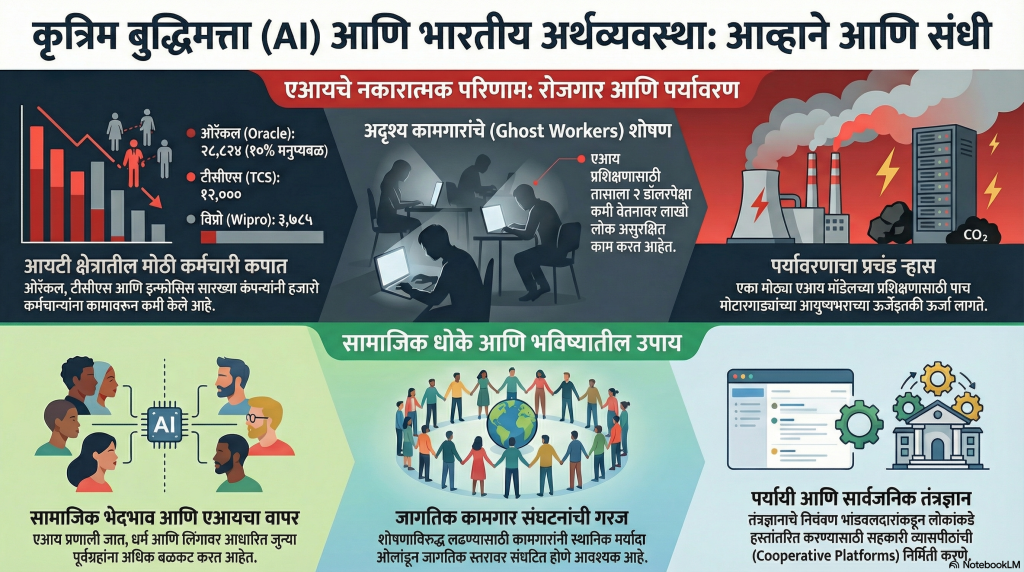
    What makes AI stand out is that it is not merely a tool but an infrastructure in its own right. It depends on data centres, fibre-optic cables, specialised chips, a huge amount of energy, heavy water usage, cooling systems, and often an invisible workforce that trains and maintains it, mostly known as ghost workers. The seamless conversational AI interface hides an industrial apparatus of overwhelming scale. Governments announcing AI policies and projects means that they are effectively announcing massive infrastructure projects similar to railways or power plants, except that these infrastructures are frequently privately owned and globally integrated from the outset. Such infrastructures essentially determine countries’ dependence on other countries with more developed AI systems, which in turn determines which regions supply resources, who gains decision-making power, and who absorbs the costs.

    What helps here in understanding this complexity and contradiction is India’s emerging data-centre boom. Prima facie, it appears to be the government’s integration into the digital future as a project, but in reality, it requires a vast amount of energy and water. By 2026, India’s data centre capacity is expected to more than double, going from about 870 MW in 2023 to over 1.8 GW. This will require power on par with that of a medium-sized city in India. Depending on the technology and the weather, estimates suggest that a single large hyperscale data centre can use between 10 and 50 million litres of water a year to cool itself. This growth is happening in a country where many families still struggle to access reliable water, and energy prices are rising. NITI Aayog has warned that almost 600 million Indians are under significant water stress. People who live in cities like Bengaluru, Hyderabad, and parts of Mumbai often rely on tanker water during the summer and pay several times the municipal rate for a basic need. The paradox is more striking than it appears: a technology celebrated for its immaterial intelligence intensifies competition over the most material resources, such as land, water, and power. When computing capacity expands, something else must contract, and it is rarely the consumption of the affluent.

    The labour dimension of AI reveals a similar pattern of dispossession and displacement. Public discourse often frames AI as displacing human work, however, the system depends on a vast workforce that remains largely invisible. Millions of workers, mostly from the Global South, label images, annotate, filter violent content, transcribe speech, translate languages, and correct errors so that machine-learning models can function. This labour is often outsourced through layers of subcontracting to regions where wages are lower and protections weaker. These workers would never see the final product they helped create. They only encounter fragmented tasks delivered via digital platforms. Nonetheless, there are a few companies in India that take on contracts for data annotation and labelling for Silicon Valley tech giants, mostly through multiple contract chains in between. The crucial question then emerges: are such workers in India protected by the law? Because the effect is not the end of labour but its fragmentation into micro-tasks that are difficult to organise or recognise as employment. It indicates that factories are not gone but have started mediating through our living rooms, small offices and odd working spaces throughout the global south.

    Recent unrest in India’s IT sector illustrates how AI reorganises work without necessarily replacing it wholesale. Layoffs are often framed as a technological inevitability, but coincide with corporate restructuring and cost reduction. Entry-level jobs are vanishing for sure, but the pressure to increase productivity is being shifted to those who remain and to the invisible/ghost workers in the supply chain. Workers are continually pushed to upskill, and insecurity is imposed on them as the price of their relevance. AI becomes less an option for labour than an apparatus for disciplining it and pushing them into more precarious positions, while simultaneously setting new benchmarks for speed and availability. The promise of efficiency thus translates into a redistribution of risk from corporations to individuals.

    The political implications, however, extend beyond labour markets into public governance. Data has now become a strategic resource, and control over data infrastructures extends influence over state functions. The usage of private analytics companies within public institutions reflects anxiety about whether essential services should depend upon proprietary systems controlled by external actors. Even the British Parliament was shaken by the ramifications of such interference in their prominent state-funded National Health Service. The wealthy nations are also alarmed by the gradual erosion of autonomy when critical infrastructure becomes dependent on a handful of private companies. For countries with fewer resources, the stakes are even higher. These waters we trade in are quite dangerous, especially when you have no national-level firm policy to protect its citizens and their data.

    Environmental costs add layers to this political economy of AI. In regions already confronting climate stress, this can intensify local vulnerabilities. The extraction of minerals required for this infrastructure links the political economy of AI to global supply chains originating especially in ecologically fragile zones. Thus, a technology marketed as futuristic relies on resource frontiers that resemble those of earlier industrial expansions. As a result, the profits and benefits of such technology get concentrated in wealthier regions, while extraction zones bear long-term environmental damage.

    AI, its production and associated technologies are already concentrated in the hands of a few Silicon Valley companies. Even though the usage of the final products of AI technologies is being enjoyed by a smaller chunk of the population, specifically the urban middle classes, most of its benefits are being accrued by private companies to increase productivity and accumulate profits. While AI concentrates economic gains in a small number of corporations, the increased pressure on labour and natural resources is always pushed on regions with limited bargaining power. None of these outcomes is predetermined by technology itself, but they follow the already existing unequal arrangements within which technology takes shape.

    The ongoing sense of awe about AI is partly due to how people in our society view technology as an independent force rather than a choice made by society. This lets us celebrate new ideas without having to discuss how to distribute their benefits. But history shows that technological changes always create winners and losers, and that the outcomes depend on political negotiation. The printing press, the steam engine, and the internet all made new things possible, but they also made old problems worse in new ways. AI is likely to follow a path that is just as contradictory.

    A democratic response to such a challenge cannot be based on fear or uncritical enthusiasm. It would require recognising AI as a field of contestation. We must be able to address political questions arising from this conjuncture, such as who owns data, who regulates these models, who benefits from them, and who bears the costs. Public investment in this area becomes critical and demands prioritising open systems and public oversight. Labour laws must adapt to recognise new forms of work arising from these changes, and environmental regulations must account for resource footprints. This wouldn’t be anti-technology; those would be the attempts to align technological advancement with social priorities.

  • Nationalism through Time and Space: A Comparative Study of Indian and European Nationalism

    Nationalism through Time and Space: A Comparative Study of Indian and European Nationalism

    (The article was originally a paper I submitted to a course on ‘State and Democracy, taught by Prof Ashwini Kumar, during my MA at TISS, Mumbai)

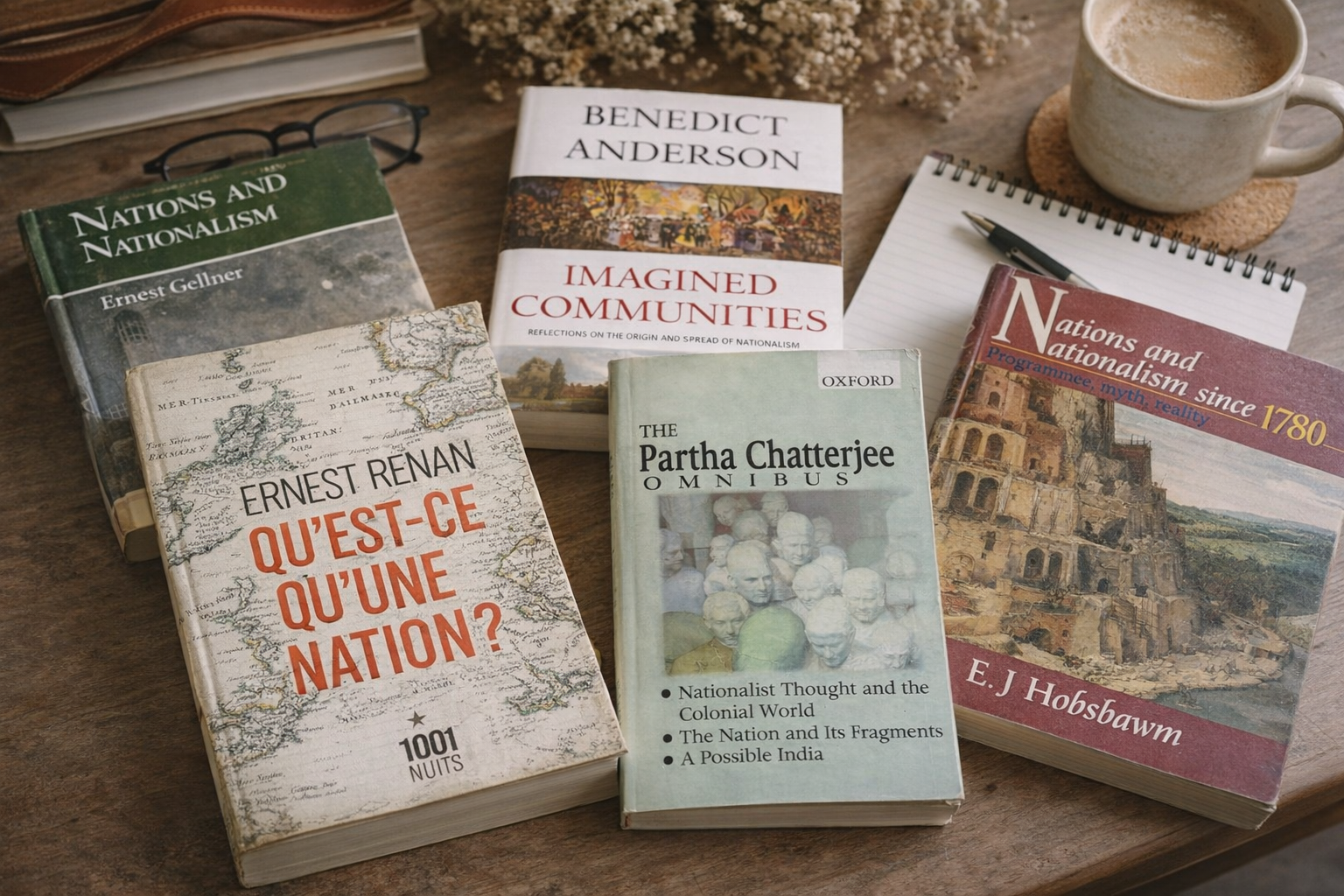
    ‘Nations are not something eternal. They began, so they will come to an end’, said Ernest Renan in his celebrated article Qu’est-ce qu’une nation?  (1882). In the contemporary period, the perversion of nationalism by stressing ethnic politics in India has damaged the post-colonial legacy of nationalism and is now considered a problem in the general academic discourse and the public as well. The problem of nationalism in India cannot be approached solely from the perspective of the indigenous development of nationality, in isolation, but rather from the perspective of European conceptualisation. Another hindrance we face is the multi-faceted and region-specific nature of the definition of nationalism. There is no widely recognised definition. There are differences over the term’s genesis, too. In Benedict Anderson’s words, ‘no one has been able to prove either its modernity or its antiquity decisively’. Thus, the study of nationalism necessarily and inevitably starts with the historical understanding of it. Carl J. Friedrich had once said that there was a need to distinguish between the ‘old’ nations of the West, which developed under ‘The Great Transformation’, and newly formed post-colonial nations, which were deliberate constructions. Therefore, our investigation should also start with theories of European Nationalism and later compare and differentiate them with those of India.

    To have this comparative study, the paper presents three important European theorists of Nationalism- Ernest Gellner, who necessarily belongs to the liberal-rational school, Eric Hobsbawm and Benedict Anderson, both of them of the Marxist School (Hrosh and Smith among others) and Partha Chatterjee, as one of the prominent theorists of Indian Nationalism.

    Following the discourses on the genesis and origin of the concept, we begin with Gellner, who finds the emergence of nationalism in the social transformations of the nineteenth century (Gellner, 1996). Indeed, not all propositions and theoretical projections are true in India. Yet, we could seek some historical traits which are identical to Indian situations. Gellner sees nationalism as ‘linking the state and the nationality defined culture’, a feature found in every nation’s conceptualisation. Further, he creates two models for micro-units evolving into nations, the process which proceeds in five stages. So, for Gellner, nation formation requires a peculiar structuration and standardisation of society that emerges in the epoch of Industrial society. First, he tries to describe the ‘agro-literate society’ which he finds not suitable or ripe for the emergence of nationality and/or nationalism. For him, a characteristic value of such a society is ‘nobility’, which means a conjunction of military vocation and ascribed ‘high status’ (Gellner, 1996). We cannot relate the Indian situation (specifically in the colonial period) to his conceptualisation, as the former was definitely an agro-society but not literate; yet we could see the emergence of ‘nationalism’ in pre-independent India, which will be discussed thoroughly later in this paper by referring to Partha Chatterjee’s argument, which links it with the literate-elites of India. There are two ways to maintain order in agrarian societies: coercion and consent (Gellner, 1996), a feature also evident in the feudal societies of India, especially the caste-system-driven feudalism. As relations of production and subsequent distribution also play a vital role in creating solidarity among people within a territory, caste-system-driven feudalism becomes crucial. Nonetheless, Gellner also says, ‘tools and techniques on their own cannot make men conform to the rules of distribution: this can only be done through either coercion or consent, or a fusion of both.’ This type of society relies not only on its differentiated agrarian structure but also on literacy. Whereas writing plays a crucial role in preserving, transmitting, and further accumulating data, ideas, affirmations, information, and principles. (Gellner, 1996). This leads to formation of ‘distinguished culture’ with the specified newly evolved ‘language’ which we take on the jobs and makes literacy as ‘badge of rank’ as well as constituting ‘a guild mystery’ (Gellner, 1996). The question arises whether Sanskrit and Brahminism played the same role in the creation of nationality, or whether something more is at work.

    Dr B. R. Ambedkar also stressed the question of whether India is a nation or not, which has been the subject matter of controversy between the Anglo-Indian and the ‘Hindu Politicians’ ever since the Indian National Congress was founded (Ambedkar, 2017). However, Ambedkar implicitly directed it to the question of the caste system, which emerged when he told Gandhi- We do not have a motherland’. Nevertheless, in both cases, it defies Gellner’s propositions anyway, as Gellner does not consider the genesis of nationalism in such a society. Because he thinks that agrarian society engenders estates, castes, guilds, and status of all kinds, which require cultural expression.

    The kind of ‘cultural homogeneity’ which causes the coming of nationalism, Gellner sees, in the ‘Advanced Industrial Society’. Gellner discerns two principles of legitimacy for social order: one, economic growth and two, nationality, which constitutes our theme. The industrial society, Gellner expects, which is structured and standardised, could hardly be organised on any base other than a national one (Gellner, 1996). This very society expects the same culture contextualised within the ambit of the State, where the nature of labour, which has become semantic, and work requires impersonal context-free communication between individuals, members of the broad mass. This can only be done if the members of that broad mass share the same rules for formulating and decoding messages. In other words, they must share the same culture. And it will be a high culture, for this standardised skill can only be acquired in formal schooling. This high culture is maintained by the state which plays crucial role and ‘can perform the task of quality control in this most important of all industries, that is the production of socially acceptable, industrially operational human beings (Gellner, 1996). Hence, we could say that nationalism means ‘a principle which holds that the political and national unit should be congruent (Gellner, Nations and Nationalism).

    Taking Gellner’s theorisation further with two broader concepts: one, cultural homogeneity and two, semantic and/or language-based high culture coupled by economic growth; using these as tools to articulate Indian nationalism, we get two totally different premises. Considering cultural homogeneity in the premise of ethnicity, which basically comes from right-wing ideologues in its fullest form, and another premise is in terms of language, literature and/or overall education (in the context of Partha Chatterjee’s conceptualisation). As Anthony Smith puts it- ‘Nation is a named human population sharing a historic territory, common myths and historical memories, a mass, public culture, a common economy and common legal rights and duties of all members’ (Smith, 1991). Smith’s nationalism deals with the material of cultural identities and cultural nations; it is ‘a form of culture—an ideology, a language, a mythology, symbolism and consciousness—that has achieved global resonance and the nation is a type of identity whose meaning and priority is presupposed by this form of culture’ (Smith, 1991).

    The first premise of ethnicity in cultural homogeneity has always been regressive in the Indian context, where we witness the imposition of a majoritarian perception of history, culture and language. In Ernest Renan’s words- ‘Forgetting history, or even getting history wrong, is an essential factor in the formation of a nation, which is why the progress of historical studies is often dangerous to a nationality’ (Renan, 1882). Unfortunately, the history that nationalists want is not the history that professional academic historians, even ideologically committed ones, ought to supply (Hobsbawm, 1996). In contemporary times, we have also been witnessing many versions of distorted history emerging from the ruling party to legitimise their rule under the guise of nationalism, sometimes even within the domain of the state and with its help. According to Hobsbawm, ‘nationalism is nothing but a political programme’ which encompasses territoriality, particular ethnicity and also language, which is taken, wherever possible, to express and symbolise ethnicity. For example, in India, right-wing Hindutva parties have always had a narrative of ‘Hindi, Hindu and Hindustan’. This political programme seeks to exercise supreme control over a stretch of territory with a homogeneous population, which serves as an essential body of citizens.

    The second premise will inevitably take us to discuss Partha Chatterjee’s conceptualisation of nationalism in India. His works, ‘Nationalist Thought and the Colonial World: A Derivative Discourse?’ and ‘Whose Imagined Community?’, explicate and criticise the ‘sociologism’ of Gellner and Anderson as well. This approach defies all presumptions and teleological fallacies of Hindu-ethnic nationalism and describes Indian nationalism from a very different perspective. Chatterjee has used two analytical frameworks in formulations- one, ‘thematic’ and ‘problematic’ (Raju, 1993). For Chatterjee, Indian Nationalism is problematic here and considers general idea of nationalism as thematic and the relation between both is not simple, for him, Indian Nationalism is nothing but the derivative of general idea of nationalism i.e. European nationalism. He sees every idea of nationalism as a problem in the history of ideas itself by taking into account the knowledge/power axis, which sees ‘thought’ as dominating or subjugating. He sees nationalism as a Western idea, originating in the Enlightenment. The conception of rationality underlying the nationalist discourse is derived from the Enlightenment presuppositions of man and society, which we could find in the ‘social contract’ discourse. In this discourse, man has been shown forming and shaping a social state which eventually takes the form of ‘artificial society’ and hence the ‘general will’ can be viewed as forming the ideological basis for the idea of nationalism (Raju, 1993). This theorisation finds expression in Gellner’s work on the transformation from an agrarian to an industrial society. But Chatterjee sees these transformations as discontinuous, which makes the very European idea of nationalism a discontinuous discourse. Once upon a time, nationalism was considered one of Europe’s most magnificent gifts to the rest of the world, but later, Europe’s failure to manage its ethnic component had repercussions for post-colonial countries. Chatterjee says, ‘whether good variety or the bad, nationalism was entirely a product of the political history of Europe’.

    Chatterjee begins the conceptualisation of Indian Nationalism with a critique of the theoretical tendency represented by Anderson, which certainly seeks to treat the phenomenon as part of the universal history of the modern world (Chatterjee, 1996). His most profound and central objection to Anderson is: if nationalism in third-world countries (which used to be colonies) has to choose its own imagined community, and that too using the ‘Modular Forms’ given by these European countries, what do they have left to choose? This question is crucial to the whole articulation of nation and nationality, not just in India but in every third-world country. For Chatterjee, such countries have always been ‘perpetual consumers of modernity’; even our imaginations must remain forever colonised. Anderson’s assumption that the ‘modular forms’ are used by all countries around the world, considered hasty by Chatterjee, for him, the nationalist imagination of these countries was not in using those modular forms but in deviating from them. To explain these, Chatterjee divides the world of social institutions into two domains responsible for the emergence of nationalism: the material (outer) and the spiritual (inner). Whereas the ‘material’ domain is concerned with the modular forms that have been used in the Western world and adopted and/or imposed on third-world countries. The spiritual domain is where these countries leave their ‘essential’ mark on their cultural identity. The greater the adoption or imitation of Western skills, the greater the need to preserve your own spiritual culture, and that’s where Indian Nationalist Movement leaders come into the scenario and try to articulate a ‘derivative’ version of nationalism (Chatterjee, 1996). Here, ‘derivative’ means the adoption of Western ideals, along with a heavy reliance on indigenous cultural ideas. This formula for Chatterjee is a fundamental feature of anti-colonial nationalisms in Asia and Africa. In his own words, ‘if the nation is an imagined community, then this is where it is brought into being’. That nation was already sovereign, even when states were still under colonial rule, due to the presence of the spiritual domain.

    Indian nationalism is a blend of modernity, which is material and Western in nature, and indigeneity, shaped by bilingual elites in India. Bilingual in the sense of the English-speaking middle-class of colonial India, who were also strongly hesitant about the incorporation and maintenance of the culture of India, mostly in the form of languages. Chatterjee says, ‘Anderson is entirely correct in his suggestion that it is ‘print-capitalism’ which provides the new institutional space for the development of the modern ‘national’ language’. This spiritual domain lies beyond the state’s domain. This very acceptance of Western material progress and affirmation of India’s own spiritual domain lead to the demand for autonomy within the state itself. This act of demanding autonomy within the state domain, which of course was colonial, is based on ‘rule of colonial difference’. Ultimately, this leads to the breakdown of British benevolence and confirms its own form of nationalism.

    To conclude, the conceptualisation of Indian nationalism itself poses questions about the historicity of colonial developments and accordingly relocates the politics associated with it, in the present and the past as well. This relocation keeps the pendulum oscillating, shifting our positions on the compromise of autonomy, and keeps nationality as subjective as possible.

    References:

    Gellner, E. (1996). The coming of Nationalism and Its Interpretations. In B. Anderson, Mapping the Nations (p. 98). London: Verso.

    Ambedkar, B. R. (2017). Who constitutes nation? In S. I. Habib, Indian Nationalism: Essential Writings. New Delhi: Rupa.

    Chatterjee, P. (1999). The Partha Chatterjee omnibus: Comprising Nationalist thought and the colonial world, The nation and its fragments, and A possible India. Oxford University Press.

    Gellner, E. (1983). Nations and nationalism. London: Blackwell.

    Smith, A. (1991). National Identity. Harmodsworth: Penguin.

    Renan, E. (1882). What is Nation?

    Hobsbawm, E. (1996). Ethnicity and Nationalism in Europe Today. In B. Anderson, Mapping the nations (p. 255). London: Verso.

    A. Raghurama Raju. (1993). Problematising Nationalism. Economic and Political Weekly, 28(27/28), 1433–1438.

  • मराठीचा प्रश्न, भांडवलशाही आणि विस्थापनाचे समांतर प्रवाह

    मराठीचा प्रश्न, भांडवलशाही आणि विस्थापनाचे समांतर प्रवाह

    मराठी भाषा आणि महाराष्ट्राचे भविष्य हे एकमेकांत गुंतलेले आहेत.

    इंडी जर्नल (Jun 07, 2025 8:09 PM)


    Read Here (इथे वाचा):

    https://www.indiejournal.in/article/hitesh-potdar-on-marathi-and-capitalism