Category: Inequalities

  • Who benefits from AI, and who pays the costs?

    Who benefits from AI, and who pays the costs?

    The Political Economy and Political Ecology of AI in India (Part I)

    Over the last few weeks, artificial intelligence (AI) has evolved from a technological spectacle to a political flashpoint across continents. At the recent high-profile AI summit in India, intended to showcase the country’s digital ambitions, it became a story of organisational chaos and corporate spectacle rather than the technology itself. A week before that, Indian opposition leader Rahul Gandhi questioned whether India was becoming merely a market and data supplier in a global AI economy rather than a decision-maker within it. At the same moment, in the viral snippet of the speech from the CEO of Palantir, Peter Thiel, remarked, suggesting that advanced data systems could shape electoral outcomes, intensifying fears about the political uses of analytics. In the British Parliament, its members engaged in a heated debate over the role of private technology firms in managing data from Britain’s widely applauded state-funded National Health Service, raising concerns about sovereignty, accountability, and public trust. These episodes may appear disconnected, but together they reveal a common anxiety. AI is no longer just a tool for productivity, but it is becoming an instrument of power.

    The unease may again arise about the machines becoming conscious. However, it is more about reorganising authority. When political leaders worry about data depart national control, when public institutions hesitate to rely on proprietary algorithms, when citizens suspect that elections or welfare systems could be influenced by opaque infrastructures, they are responding to a deeper transformation. AI is quietly shifting its boundaries of innovation to that of governance now. It has started mediating key sectors such as health, education, policing, credit, and communication, which directly affect citizens’ everyday lives. Thus, the central question must no longer be what AI can do, but who it enables to decide over its production and use.

    India’s discourse emerges within this transition with unusual clarity. Recent speeches in Parliament (India and elsewhere) situate AI as a site of dependency rather than merely an opportunity for growth. At present, the immediate question is whether the country risks exporting raw data while importing technologies such as AI.

    The spectacle of innovation can coexist with a quiet transfer of control. Large language models are trained on the linguistic and cultural output of millions around the world, mostly in the global south, but the final products are owned elsewhere, leading to knowledge itself becoming a commodity extracted and resold. The celebration of technological progress often masks the real societal, collective inputs through labour, data, and natural resources, while the profits are captured by a few, and the real use of such technologies is limited to a smaller section of elites.

    The historical anxieties about earlier, more crude forms of technology appear less quaint and more as lessons. Societies have always had an instilled fear of machines, not because they were inherently destructive, but also because they reorganised power. The printing press undermined religious monopolies while enabling new forms of ownership and censorship. The steam engines expanded production but intensified industrial discipline. Similarly, AI belongs to this lineage. It is not simply a smarter machine but a system that enables the redistribution of wealth, knowledge, labour, and authority, and this time on a planetary scale.

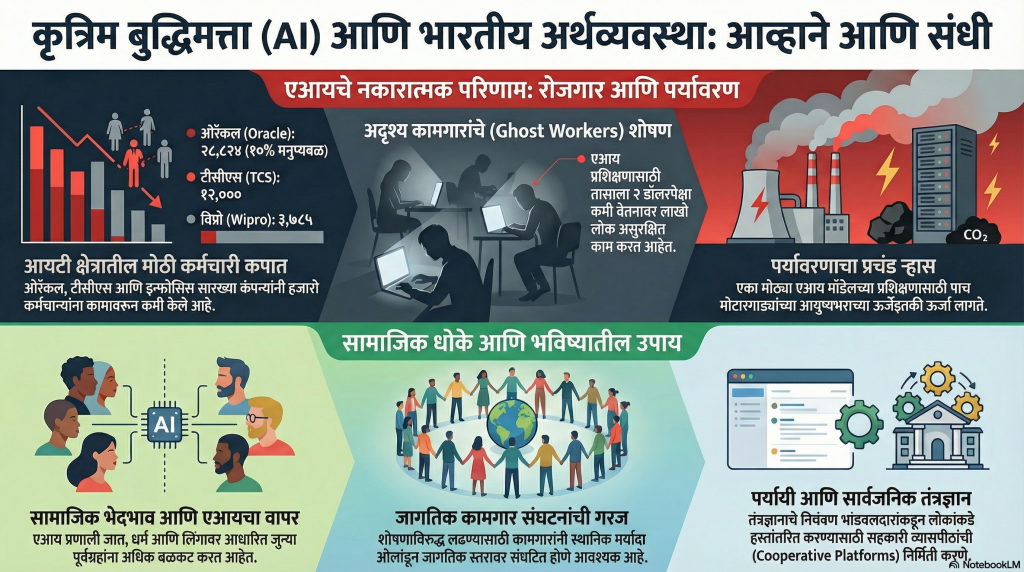
    What makes AI stand out is that it is not merely a tool but an infrastructure in its own right. It depends on data centres, fibre-optic cables, specialised chips, a huge amount of energy, heavy water usage, cooling systems, and often an invisible workforce that trains and maintains it, mostly known as ghost workers. The seamless conversational AI interface hides an industrial apparatus of overwhelming scale. Governments announcing AI policies and projects means that they are effectively announcing massive infrastructure projects similar to railways or power plants, except that these infrastructures are frequently privately owned and globally integrated from the outset. Such infrastructures essentially determine countries’ dependence on other countries with more developed AI systems, which in turn determines which regions supply resources, who gains decision-making power, and who absorbs the costs.

    What helps here in understanding this complexity and contradiction is India’s emerging data-centre boom. Prima facie, it appears to be the government’s integration into the digital future as a project, but in reality, it requires a vast amount of energy and water. By 2026, India’s data centre capacity is expected to more than double, going from about 870 MW in 2023 to over 1.8 GW. This will require power on par with that of a medium-sized city in India. Depending on the technology and the weather, estimates suggest that a single large hyperscale data centre can use between 10 and 50 million litres of water a year to cool itself. This growth is happening in a country where many families still struggle to access reliable water, and energy prices are rising. NITI Aayog has warned that almost 600 million Indians are under significant water stress. People who live in cities like Bengaluru, Hyderabad, and parts of Mumbai often rely on tanker water during the summer and pay several times the municipal rate for a basic need. The paradox is more striking than it appears: a technology celebrated for its immaterial intelligence intensifies competition over the most material resources, such as land, water, and power. When computing capacity expands, something else must contract, and it is rarely the consumption of the affluent.

    The labour dimension of AI reveals a similar pattern of dispossession and displacement. Public discourse often frames AI as displacing human work, however, the system depends on a vast workforce that remains largely invisible. Millions of workers, mostly from the Global South, label images, annotate, filter violent content, transcribe speech, translate languages, and correct errors so that machine-learning models can function. This labour is often outsourced through layers of subcontracting to regions where wages are lower and protections weaker. These workers would never see the final product they helped create. They only encounter fragmented tasks delivered via digital platforms. Nonetheless, there are a few companies in India that take on contracts for data annotation and labelling for Silicon Valley tech giants, mostly through multiple contract chains in between. The crucial question then emerges: are such workers in India protected by the law? Because the effect is not the end of labour but its fragmentation into micro-tasks that are difficult to organise or recognise as employment. It indicates that factories are not gone but have started mediating through our living rooms, small offices and odd working spaces throughout the global south.

    Recent unrest in India’s IT sector illustrates how AI reorganises work without necessarily replacing it wholesale. Layoffs are often framed as a technological inevitability, but coincide with corporate restructuring and cost reduction. Entry-level jobs are vanishing for sure, but the pressure to increase productivity is being shifted to those who remain and to the invisible/ghost workers in the supply chain. Workers are continually pushed to upskill, and insecurity is imposed on them as the price of their relevance. AI becomes less an option for labour than an apparatus for disciplining it and pushing them into more precarious positions, while simultaneously setting new benchmarks for speed and availability. The promise of efficiency thus translates into a redistribution of risk from corporations to individuals.

    The political implications, however, extend beyond labour markets into public governance. Data has now become a strategic resource, and control over data infrastructures extends influence over state functions. The usage of private analytics companies within public institutions reflects anxiety about whether essential services should depend upon proprietary systems controlled by external actors. Even the British Parliament was shaken by the ramifications of such interference in their prominent state-funded National Health Service. The wealthy nations are also alarmed by the gradual erosion of autonomy when critical infrastructure becomes dependent on a handful of private companies. For countries with fewer resources, the stakes are even higher. These waters we trade in are quite dangerous, especially when you have no national-level firm policy to protect its citizens and their data.

    Environmental costs add layers to this political economy of AI. In regions already confronting climate stress, this can intensify local vulnerabilities. The extraction of minerals required for this infrastructure links the political economy of AI to global supply chains originating especially in ecologically fragile zones. Thus, a technology marketed as futuristic relies on resource frontiers that resemble those of earlier industrial expansions. As a result, the profits and benefits of such technology get concentrated in wealthier regions, while extraction zones bear long-term environmental damage.

    AI, its production and associated technologies are already concentrated in the hands of a few Silicon Valley companies. Even though the usage of the final products of AI technologies is being enjoyed by a smaller chunk of the population, specifically the urban middle classes, most of its benefits are being accrued by private companies to increase productivity and accumulate profits. While AI concentrates economic gains in a small number of corporations, the increased pressure on labour and natural resources is always pushed on regions with limited bargaining power. None of these outcomes is predetermined by technology itself, but they follow the already existing unequal arrangements within which technology takes shape.

    The ongoing sense of awe about AI is partly due to how people in our society view technology as an independent force rather than a choice made by society. This lets us celebrate new ideas without having to discuss how to distribute their benefits. But history shows that technological changes always create winners and losers, and that the outcomes depend on political negotiation. The printing press, the steam engine, and the internet all made new things possible, but they also made old problems worse in new ways. AI is likely to follow a path that is just as contradictory.

    A democratic response to such a challenge cannot be based on fear or uncritical enthusiasm. It would require recognising AI as a field of contestation. We must be able to address political questions arising from this conjuncture, such as who owns data, who regulates these models, who benefits from them, and who bears the costs. Public investment in this area becomes critical and demands prioritising open systems and public oversight. Labour laws must adapt to recognise new forms of work arising from these changes, and environmental regulations must account for resource footprints. This wouldn’t be anti-technology; those would be the attempts to align technological advancement with social priorities.


  • मराठीचा प्रश्न, भांडवलशाही आणि विस्थापनाचे समांतर प्रवाह

    मराठीचा प्रश्न, भांडवलशाही आणि विस्थापनाचे समांतर प्रवाह

    मराठी भाषा आणि महाराष्ट्राचे भविष्य हे एकमेकांत गुंतलेले आहेत.

    इंडी जर्नल (Jun 07, 2025 8:09 PM)


    Read Here (इथे वाचा):

    https://www.indiejournal.in/article/hitesh-potdar-on-marathi-and-capitalism

  • पुरुष म्हणून मी कोणत्या स्थानावरून बोलतो? ही व्यवस्था ओळखूनही त्यातील माझी गुंतवणूक मी कशी तोडू शकेन?

    पुरुष म्हणून मी कोणत्या स्थानावरून बोलतो? ही व्यवस्था ओळखूनही त्यातील माझी गुंतवणूक मी कशी तोडू शकेन?

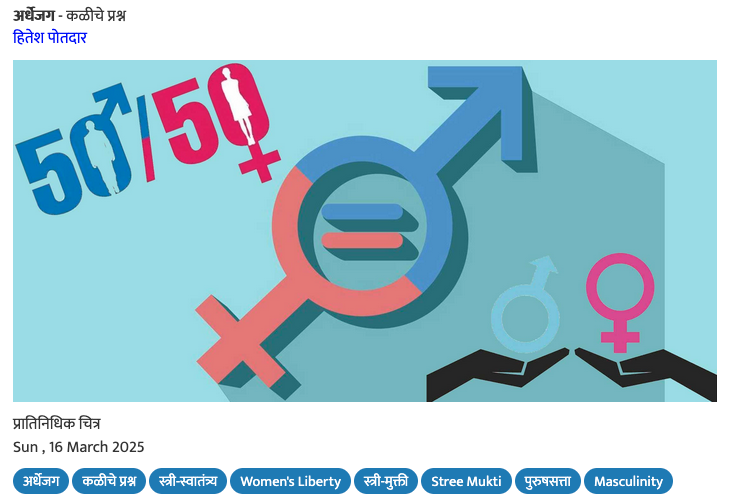
    अक्षरनामा (Sun , 16 March 2025)

    अर्धेजग – कळीचे प्रश्न
    हितेश पोतदार

    https://www.aksharnama.com/client/article_detail/7447

    एक पुरुष म्हणून माझ्या अनुभवाची आणि माझ्या विचार करण्याच्या चौकटीची मर्यादा ओळखणं गरजेचं आहे. मी कोणत्या स्थानावरून हे बोलतो? आणि माझी भूमिका केवळ बघ्याची आहे का? सांड्रा हार्डिंग यांच्या ‘Standpoint Epistemology’नुसार, प्रत्येक ज्ञाननिर्मिती ही एखाद्या विशिष्ट ठिकाणाहून एका ठराविक स्थानावरून केली जाते.

    हे स्थान किंवा ठिकाण लक्षात ठेवून, मी या व्यवस्थेचा लाभार्थी आहे हे मानून, त्या व्यवस्थेवर टीका करायचा प्रयत्न करतो, तेव्हा एक दुहेरी प्रश्न निर्माण होतो- मी माझ्या स्थानावर किती स्पष्ट आहे? आणि मी ज्या अन्यायावर भाष्य करतो, त्यात माझ्या स्वतःच्या भूमिका किती आधारभूत आणि खोलवर गुंतलेल्या आहेत? बेल हुक्स म्हणतात की, ‘The first act of resistance is self- reflection’.

    म्हणजेच, मी ज्या पायावर उभा आहे, त्याचं भान न ठेवता केलेलं भाष्य केवळ एक बौद्धिक कवायतीपेक्षा अधिक काहीही ठरणार नाही. म्हणूनच, माझ्या व्यक्तिगत अनुभवांचा तपास घेत, मी पितृसत्ताक व्यवस्थेच्या चौकटीत कसा घडत गेलो, हे समजून घेणं महत्त्वाचं ठरतं. डोना हॅरावे ‘Situated Knowledges’मध्ये म्हणतात की, ‘Knowledge is always partial and situated’. याचा अर्थ मी जे काही इथे लिहिणार आहे ते कधीच अंतिम नसेल; परंतु माझा प्रयत्न हा प्रामाणिकपणे तिथे पोहोचण्याचा असेल.

    जर हा संवाद केवळ बौद्धिक व्यायाम म्हणूनच राहिला, तर तो स्वतःच्याच विशेषाधिकारांना बळकट करणारा ठरेल. त्यामुळे माझं हे लेखन स्वतःला तटस्थ ठेवून नव्हे, तर माझ्या स्वतःच्या गुंतवणुकीचं, विशेषाधिकाराचं आणि पितृसत्ताक व्यवस्थेतील भूमिकेचं भान ठेवत सुरू आहे. रीचा नगर यांच्या ‘Hungry Translations’मधील विचार लक्षात घेतल्यास, एक पुरुष म्हणून स्त्रीवादी प्रतिरोधाच्या चर्चेत मी नेमकं कुठे उभा राहतो, याचं भान ठेवणं महत्त्वाचं आहे. फक्त ‘स्त्रियांबद्दल’ बोलणं आणि ‘स्त्रियांसोबत’ बोलणं यात फरक आहे.

    म्हणून या आत्मपरीक्षणातूनच पुढे जाण्याची गरज आहे. महिलांच्या श्रमाचा विचार केवळ ‘दुसऱ्या’च्या अनुभवातून करण्याऐवजी, स्वतःच्या स्थानाची उकल करत, ‘मी’ या व्यवस्थेचा कसा भाग आहे, आणि त्यातून बाहेर पडणं शक्य आहे का, हे तपासण्यासाठी मी हा लेख लिहिण्याचा प्रयत्न केला आहे.

    स्त्रीच्या कामाचा अदृश्य ठसा आणि पितृसत्ताक जाणिवेतील त्याचं रूपांतर

    माझ्या अगदी अवतीभोवतीच्या स्त्रिया कोण आहेत? बायको, आई, बहीण, आजी, मावशी आत्या, मामी-काकू, मैत्रिणी आणि मग इतर. या साऱ्यांशी माझे नाते कसे जुळते, याचा विचार करताना ही नाती दोन प्रकारे बघू शकतो. एक- जन्माने माझी ज्यांच्याशी नाळ जुळली आहे. त्या स्त्रिया आणि दोन – जाणीवपूर्वक सामाजिक संबंध प्रस्थापित करून संपर्कात आलेल्या स्त्रिया, जसे की मैत्रिणी, कामाच्या ठिकाणच्या सहकारी, आणि रोजच्या दैनंदिन जीवनात भेटणाऱ्या स्त्रिया.

    पहिल्या गटातल्या स्त्रियांशी माझा पहिला संबंध हा जैविक असतो. आईच्या पोटातून जन्म घेताना मी या जगात प्रवेश करतो, परंतु त्या जन्माची आणि आईच्या श्रमाची मला जाणीव होण्यासाठी कित्येक वर्षं लागतात. त्या काळात, माझ्या जाणिवेचा आणि संबंधाचा पाया हा त्या स्त्रियांनी दिलेल्या प्रेम, जिव्हाळा आणि कधी कधी कठोर नियंत्रणाच्या अनुभवांवर आधारित असतो. सुरुवातीच्या काळात माझ्या गरजा पूर्ण करण्यासाठी मी या स्त्रियांवर अवलंबून असतो.

    माझ्या बाल्यावस्थेतल्या व लहानपणातील स्त्रियांसोबतच्या अनुभवांवर आणि त्यांना घरातील इतर पुरुषांकडून किंवा समाजातील अवतीभोवतीच्या स्त्री-पुरुषांकडून मिळालेल्या वागणुकीतून माझा दुसऱ्या गटातील म्हणजेच घराबाहेरील स्त्रियांसोबतच्या वागणुकीत बराच प्रभाव पडलेला असतो. त्याप्रमाणेच माझा स्त्रीविषयक दृष्टीकोन आकार घेत जातो. ते बघण्यासाठी मला पुन्हा माझ्या भूतकाळात जाऊन पुनरावलोकन करावे लागते. स्वतःच्या स्थानाची उकल करावी लागते. मागोवा घेऊन आजच्या माझ्या स्त्रीविषयक भूमिका किती कालसापेक्ष, समतावादी आणि सर्वसमावेशक आहेत, याचे विश्लेषण करत स्वतःत बदल घडवावे लागतात.

    संगोपन व काळजीवाहू श्रम आणि माझे पुरुष म्हणून सामाजिक नातेसंबंध

    लहानपणी माझा जगाकडे बघण्याचा पहिला ‘लिंगविरहित’ दृष्टीकोन त्या स्त्रियांनी माझ्यासाठी केलेल्या श्रमांमधून निर्माण झालेला असतो. मला उठवणं, भरवणं, स्वच्छ ठेवणं, झोपवणं, या सगळ्या प्रक्रिया ज्या मी सहज गृहीत धरतो, त्या प्रत्यक्षात मोठ्या प्रमाणावर स्त्रीच्या पुनरुत्पादक श्रमांचा (socially reproductive work) भाग असतात. हे संगोपन व काळजीवाहू श्रम (care-work) केवळ स्नेहाचा भाग नसून श्रमाचा एक अविभाज्य प्रकार आहे आणि हे लिंगनिहाय (gendered) आहे, ज्याचा स्त्रियांवरील आर्थिक आणि सामाजिक परिमाणांत सहसा विचार केला जात नाही.

    लहानपणी मी आई आणि आजूबाजूच्या स्त्रियांना स्वाभाविकरित्या या गोष्टी करताना पाहतो. जणू हेच त्यांचं मूळ काम आहे, आणि त्यात काही विशेष वेगळं नाही. माझ्या जाणिवेच्या विकासात या श्रमाचं महत्त्व हे इतकं अंतर्भूत होतं की, मला ते श्रम वाटतच नाहीत. जसं प्रख्यात बालमानसशास्त्रज्ञ जॉन पिएजे म्हणतो, बाल्यावस्थेत प्रेम आणि भावनिक संबंध प्रस्थापित करण्याची क्षमता फारच कमी असते (तर्कशुद्ध दूरच).

    लहान मूल स्पर्शाच्या अनुभवातून आणि प्रत्यक्ष शारीरिक श्रमातून निर्मित काळजीतून आपलं विश्व उलगडत जातं. त्यामुळे आईने हाताने भरवणं, बहिणीनं उचललेलं खेळणं, आजीनं सांगितलेली गोष्ट हे सगळं माझ्या लहानपणीच्या अनुभवाचा एक भाग बनतं, पण मी त्याला श्रम म्हणून पाहत नाही.

    वय वाढू लागताच, जेव्हा मी स्वतःचे निर्णय घ्यायला आणि आत्मनिर्भर व्हायला शिकतो, तेव्हा माझ्या आजूबाजूच्या स्त्रियांशी असलेला माझा संबंध बदलत जातो. मी आई, बहीण, आजी, मावशी यांना त्यांच्या विशिष्ट सामाजिक भूमिकांमध्ये पाहायला शिकतो. त्यांच्या चेहऱ्यावर उमटलेला श्रमाचा थकवा, संसाराच्या ओझ्याने झुकलेली त्यांची शरीरं, घरातल्या प्रत्येकाच्या गरजा पूर्ण करताना त्यांच्या हाता-पायांना लागणारी झीज या सगळ्या गोष्टी माझ्या अवचेतनात साठत जातात. पण प्रत्यक्ष त्यांच्यावर काय परिणाम होत आहे, त्यांचा हा संघर्ष कसा आहे, हे समजून घेण्याऐवजी मी त्याला नैसर्गिक मानतो, कारण पितृसत्ताक विचारसरणी हळूहळू माझ्या जाणिवेचा भाग होत असते.

    अनुकरण, मानसशास्त्र आणि पितृसत्तेची जडणघडण

    लहानपणी मी नुसते निरीक्षणच नव्हे, तर पुरुषांच्या वर्तनाची अनुकरणशील पुनरावृत्ती (imitative repetition) करत पुरुषसत्तेची एक लहान प्रतिकृती बनत असतो. पुरुष घरात कसा वागतो, घरातील स्त्रियांशी त्याचं कसं नातं असतं, त्यांच्या श्रमाला तो किती किंमत देतो, याची मला नक्कल करावीशी वाटते. माझ्या आजी-मावशींसोबत बोलण्याची पुरुष मंडळींची भाषा, त्यांचा कठोरपणा, स्त्रियांच्या श्रमाबाबतची उपेक्षा आणि हे त्यांचं कर्तव्यच आहे, ही शिकवण हे सगळे मी निर्दोषपणे शिकत असतो.

    हे अनुकरण केवळ खेळ नव्हे; ते पितृसत्तेच्या भाषेतले पहिले पाठ असतात. जसं की, जेव्हा वडील आईला ‘चहा घेऊन ये’ म्हणताना मीही त्यांच्या आवाजाची नक्कल करत होतो, तेव्हा आईच्या चेहऱ्यावरचा अस्वस्थपणा मला कळत नसतो, पण हा अस्वस्थपणा स्त्री-श्रमाच्या अदृश्य जंजाळाचा पहिला संदेश असतो. कारण भविष्यातही अशी व्यवस्था अबाधित ठेवण्यासाठी माझी जडणघडण सुरू झालेली असते.

    माझ्या आईच्या हातातील लाटणं, भांडी, चमचे आणि माझ्या आजारपणात काढ्यासाठी कामात येणाऱ्या आजीजवळ असणाऱ्या वनस्पतींची थप्पी, या दोन्ही माझ्या मनात स्त्रीत्वाच्या परिभाषा होत्या. अमेरिकन मानसशास्त्रज्ञ सांड्रा बेम यांच्या ‘लिंग स्कीमा सिद्धान्ता’ (Gender Schema Theory)नुसार मुलं लहानपणापासूनच विशिष्ट लिंगाशी निगडित वर्तन आणि भूमिका शिकतात, आणि त्या समाजात सतत पुनरुत्पादित केल्या जातात. इतकेच नव्हे, तर स्त्रियाही त्या भूमिका शिकवतात आणि पुढे नेतात, कारण ही एक व्यापक सामाजिक प्रक्रिया आहे. आणि कालांतराने मला माझ्या पुरुष असण्याच्या विशेषाधिकारांचा साक्षात्कार होतो व त्याचे फायदे दिसू लागतात.

    ‘सेवाभावी’ स्त्रीची रचना व मातृत्वाच्या भूमिकेचं राजकारण

    आईच्या श्रमाला नैसर्गिक मानण्याची प्रक्रिया, समाजशास्त्र आणि क्लिनिकल मानसशास्त्र प्राध्यापक नॅन्सी चोडोरो यांनी उलगडून दाखवली आहे. आईने रात्रंदिवस केलेल्या कामाचा विचार करा : मला झोपवणं, वडिलांचं जेवण गरम ठेवणे, आजारपणातही रात्रभर जागरण. हे काम प्रेम म्हणून त्याचं उदात्तीकरण होतं, पण त्याच्या मागचा घुसमटणारा थकवा आणि त्याग कधीच गणला जात नाही. चोडोरो म्हणतात तसं स्त्रियांच्या संगोपनाची भूमिका पिढ्यानपिढ्या पुनरुत्पादित केली जाते. माझ्या बहिणीला लहानपणी लाडात ‘घरटं, चूल’ देण्यात आली, तर मला ‘गाडी’ हे खेळणे नव्हते, भूमिकांची पूर्वतयारी होती.

    समाजाच्या प्रत्येक पिढीत विशिष्ट ‘पुरुषत्व’ आणि ‘स्त्रीत्व’ या संकल्पना (archetypes) तयार केल्या जातात. उदाहरणार्थ, भारतीय संस्कृतीत त्याग करणारी आई, सेवाभावी पत्नी, कर्तव्यदक्ष बहीण आणि कुटुंबाचा आधार पुरुष ही उदाहरणं आहेत. या संकल्पना मुलांच्या मानसात खोलवर रुजतात. मी जेव्हा स्त्रियांच्या श्रमाकडे पाहतो, तेव्हा त्या श्रमांचा कधी विचार करत नाही, कारण हे सर्व पूर्वनियोजित भूमिकांप्रमाणे चाललेलं आहे.

    पितृसत्तेची ही रचना केवळ सामाजिक नियमांतूनच नाही, तर आपल्या सांस्कृतिक पौराणिक कथांतून, भाषेतून, आणि खेळण्यांतूनही रुजवली जाते. लहानपणी ऐकलेल्या कथा पाहिल्या तर सीता अग्निपरीक्षा देते, सावित्री आपल्या नवऱ्यासाठी यमराजाशी संघर्ष करते, आणि द्रौपदीच्या संघर्षाला न्याय मिळत नाही, पण त्यागाची महती गाजवली जाते.

    आपल्या भाषेतही हे दिसून येतं. ‘संसार करणे’ हा शब्द स्त्रियांसाठी वापरला जातो, पण पुरुषांसाठी तो कौटुंबिक जबाबदारी पार पाडणे, असा बदलतो. ही एक संस्कृतीगत चौकट तयार केली जाते, जिथे स्त्रीचं स्थान तिच्या सेवावृत्तीतच आहे, असं गृहीत धरलं जातं. पण जेव्हा माझ्या आईने, बायकोने किंवा बहिणीनं स्वतःला ‘सेविका’ म्हणवून घेण्यास नकार दिला, तर तिने या रचनेला एक झटका दिलेला असतो. गेल ऑम्वेट यांनी म्हटल्याप्रमाणे, स्त्रियांचा संताप हा पितृसत्तेच्या भिंतीवरचा पहिला फटका असतो. हा संताप कधी गाण्यात, कधी कवितेत, तर कधी मुकाट्याने जगण्यात प्रकट होतो.

    उत्पादन, पुनरुत्पादन आणि पितृसत्तेची संरचना

    स्त्रीच्या श्रमाचा इतिहास हा मानवी समाजाच्या निर्मितीइतकाच जुना आहे. फ्रेडरिक एंगेल्सने ‘The Origin of the Family, Private Property, and the State’ (१८८४)मध्ये स्पष्ट केलं होतं की, स्त्री आणि पुरुष यांच्यातील पहिली मोठी सामाजिक असमानता ही स्त्रीच्या श्रमाच्या अधिनतेतूनच निर्माण झाली. भांडवलशाहीच्या जन्माआधी, आदिम समाजांमध्ये स्त्री- पुरुष श्रमविभाजन हे परस्परपूरक स्वरूपाचं होतं, पण उत्पादनाच्या खासगीकरणासोबतच स्त्रीच्या पुनरुत्पादक श्रमावर पुरुषसत्ताक नियंत्रण प्रस्थापित झालं. पितृसत्तेच्या स्थापनेचा मूळ हेतू केवळ पुरुषांच्या आर्थिक संपत्तीचे वारस निर्माण करणे नव्हे, तर स्त्रीच्या श्रमावर संपूर्ण हक्क प्रस्थापित करणे हादेखील होता.

    औद्योगिक क्रांतीनंतर भांडवलशाही आणि पितृसत्तेच्या संबंधाने एक नवीन दिशा घेतली. घरगुती श्रम आणि सार्वजनिक उत्पादन यामधील रेषा अधिक ठळक झाल्या. पुरुषांनी उत्पादनाच्या जागेवर हक्क सांगितला आणि स्त्रीला पुनरुत्पादक कार्यासाठी घरात कोंडलं गेलं. परिणामी, स्त्रियांनी केलेलं काम हे कसलेही आर्थिक मूल्य नसलेलं म्हणून हिणवलं गेलं. स्त्रीचे कष्टमय श्रम हे ‘प्रेम’, ‘कर्तव्य’, ‘ममत्व’ आणि ‘त्याग’ या संकल्पनांमध्ये विरघळून गेले.

    आजच्या काळात, सामाजिक पुनरुत्पादनाच्या (social reproduction) सिद्धान्तांनी हे स्पष्ट केलं आहे की, स्त्रीचे पुनरुत्पादक श्रम हे केवळ घरापुरता मर्यादित नाहीत, तर भांडवलशाहीला कार्यक्षम बनवणाऱ्या सर्व आर्थिक व सामाजिक प्रक्रियांवर आधारलेले आहेत. भांडवलशाहीने फक्त घरगुती श्रमच नाही, तर संगोपन, आणि काळजीवाहू श्रम, शिक्षण, सेवा क्षेत्रातील असुरक्षित नोकऱ्या आणि अनौपचारिक मजुरीपर्यंत स्त्रीच्या श्रमाचं अदृश्यीकरण केलं आहे. त्यामुळे आजही महिला श्रमाचं केवळ वस्तुकरण (commodification) केलं जात नाही, तर त्याला ‘त्याग’ आणि ‘कर्तव्य’ म्हणून साजरं केलं जातं.

    हा इतिहास म्हणजे केवळ भूतकाळातील एक गोष्ट नाही, स्त्रीच्या श्रमाचा प्रश्न हा केवळ सामाजिक न्यायाचा नाही, तो संपूर्ण उत्पादन व पुनरुत्पादनाच्या संरचनेचा प्रश्न आहे. आणि म्हणूनच, त्याला केवळ स्त्रीच्या भूमिकेचा विचार करून नव्हे, तर पितृसत्तेच्या आर्थिक आणि सांस्कृतिक मूलभूत तत्त्वांवर प्रश्न उपस्थित करतच उत्तर देता येईल.

    समाजाचा आणि उत्पादन व्यवस्थेचा अदृश्य कणा

    एंगेल्सच्या विश्लेषणानुसार, पितृसत्ताक व्यवस्थेचा उगम भांडवलशाहीच्या आधीच झालेला असला, तरी भांडवलशाहीने पितृसत्तेच्या संरचनांना अधिक घट्ट आणि मजबूत केले. विशेषतः, घरगुती श्रमाला अदृश्य करण्याची प्रक्रिया भांडवलशाहीत अधिक प्रणालीबद्ध झाली. पण जर आपण थोडा विचार केला, तर लक्षात येईल की, स्त्रियांनी हे अदृश्य काम करणं बंद केलं, तर कारखान्याच्या गेटपर्यंत पोहोचणारा मजूरच अस्तित्वात राहणार नाही. कामगार हा फक्त त्याच्या औद्योगिक उत्पादनाच्या जागीच तयार होत नसतो; तो त्याच्या घरी, कुटुंबामध्ये, शाळेत, आणि सामाजिक व्यवस्थेत तयार होतो. आणि हाच सामाजिक पुनरुत्पादनाचा गाभा आहे.

    स्त्रीवादी अभ्यासक तिथी भट्टाचार्य म्हणतात, “Without someone cooking the worker’s meal, washing his clothes and raising his children, there is no working class. And without the working class there is no production, no economy, and no capitalism.” यातून हे स्पष्ट होतं की, सामाजिक पुनरुत्पादन ही एक अत्यंत महत्त्वाची, पण दुर्लक्षित आर्थिक आणि सामाजिक प्रक्रिया आहे.

    सामाजिक पुनरुत्पादन म्हणजे ज्या प्रक्रिया श्रमशक्तीची पुनर्निर्मिती करतात आणि पुढच्या पिढीतील मजुरांची निर्मिती करतात. यात तीन महत्त्वाचे पैलू असतात. एक- दररोजचा पुनरुत्पादनाचा प्रवाह – स्वयंपाक, घरकाम, मुलांचं संगोपन, वृद्धांची काळजी, मानसिक आणि भावनिक श्रम. दोन- कामगारवर्गाच्या पुनर्निर्मितीचा मोठा प्रवाह शिक्षण, आरोग्य सेवा, धार्मिक-सांस्कृतिक संस्थांच्या माध्यमातून मुलांना सामाजिक भान देणं. तीन, कामगारवर्गाच्या पिढी दर पिढी पुनरुत्पत्तीचा प्रवाह विवाहसंस्था, प्रजनन, आणि स्त्रियांवरील सामाजिक-आर्थिक नियंत्रण.

    ही सर्व श्रमप्रक्रिया बहुतांशी स्त्रिया (आणि काही अंशी शासनव्यवस्था) पार पाडतात, आणि विशेषतः भांडवलशाहीत या श्रमाची किंमत शून्य करण्यासाठी भांडवल स्वतःची व्यवस्था तयार करतं. सामाजिक पुनरुत्पादन हा केवळ महिलांचा प्रश्न नाही. तो कामगारवर्गाच्या अस्तित्वाचा प्रश्न आहे. स्त्रियांवर हे काम लादून, त्याला प्रेम आणि त्याग असं संबोधून, आणि त्याची किंमत शून्य करून भांडवलशाही स्वतःच्या फायद्यासाठी जगाच्या कामकाजाला चालना देते.

    ही व्यवस्था मोडायची असेल, तर सामाजिक पुनरुत्पादन हा स्त्रीवादी आणि कामगार चळवळींचा मध्यवर्ती मुद्दा बनला पाहिजे. राजकीय, सामाजिक आणि आर्थिक परिवर्तनाच्या कोणत्याही प्रक्रियेत पुनरुत्पादक श्रम हा बाजूचा प्रश्न न ठेवता त्याला केंद्रस्थानी आणणं अपरिहार्य आहे.

    पुरुष म्हणून ही व्यवस्था ओळखूनही त्यातील माझी गुंतवणूक मी कशी तोडू शकेन? स्वतःच्या विशेषाधिकारांचा वापर स्त्री श्रमाच्या दृश्यतेसाठी करणे, हा पहिला टप्पा असावा. पुन्हा एकदा बेल हुक्स यांनी सांगितल्याप्रमाणे, प्रतिकाराची पहिली कृती स्वतःला प्रश्न विचारणे आहे. सामाजिक पुनरुत्पादनाला केंद्रस्थानी आणण्यासाठी केवळ स्त्रियांचाच नव्हे, तर पुरुषांचाही सक्रिय सहभाग आवश्यक आहे.

    ‘समतावादी मुक्त संवाद’ या मासिकाच्या मार्च २०२५च्या अंकातून साभार

    …………………………………………………………………………………………………………

    लेखक हितेश पोतदार किंग्स कॉलेज, लंडनमधील इंटरनॅशनल डेवलपमेंट आणि जियोग्राफी विभागात पी.एचडी. अभ्यासक आहेत. त्यांचे संशोधन मुख्यतः कामगार (श्रम), तंत्रज्ञान, आणि सार्वजनिक वित्त यांच्या अर्थराजकीय व्यवस्थेवर केंद्रित आहे.

    hiteshdpotdar@gmail.com

    …………………………………………………………………………………………………………

    ‘अक्षरनामा’वर प्रकाशित होणाऱ्या लेखातील विचार, प्रतिपादन, भाष्य, टीका याच्याशी संपादक व प्रकाशक सहमत असतातच असे नाही. 

    …………………………………………………………………………………………………………

  • Nationalism, Populism and Neo-Liberalism

    Nationalism, Populism and Neo-Liberalism

    (This article was published in BodhiCommons online portal. Link for the article- http://bodhicommons.org/bjp-hindutva-nationalism-populism-neoliberalism )

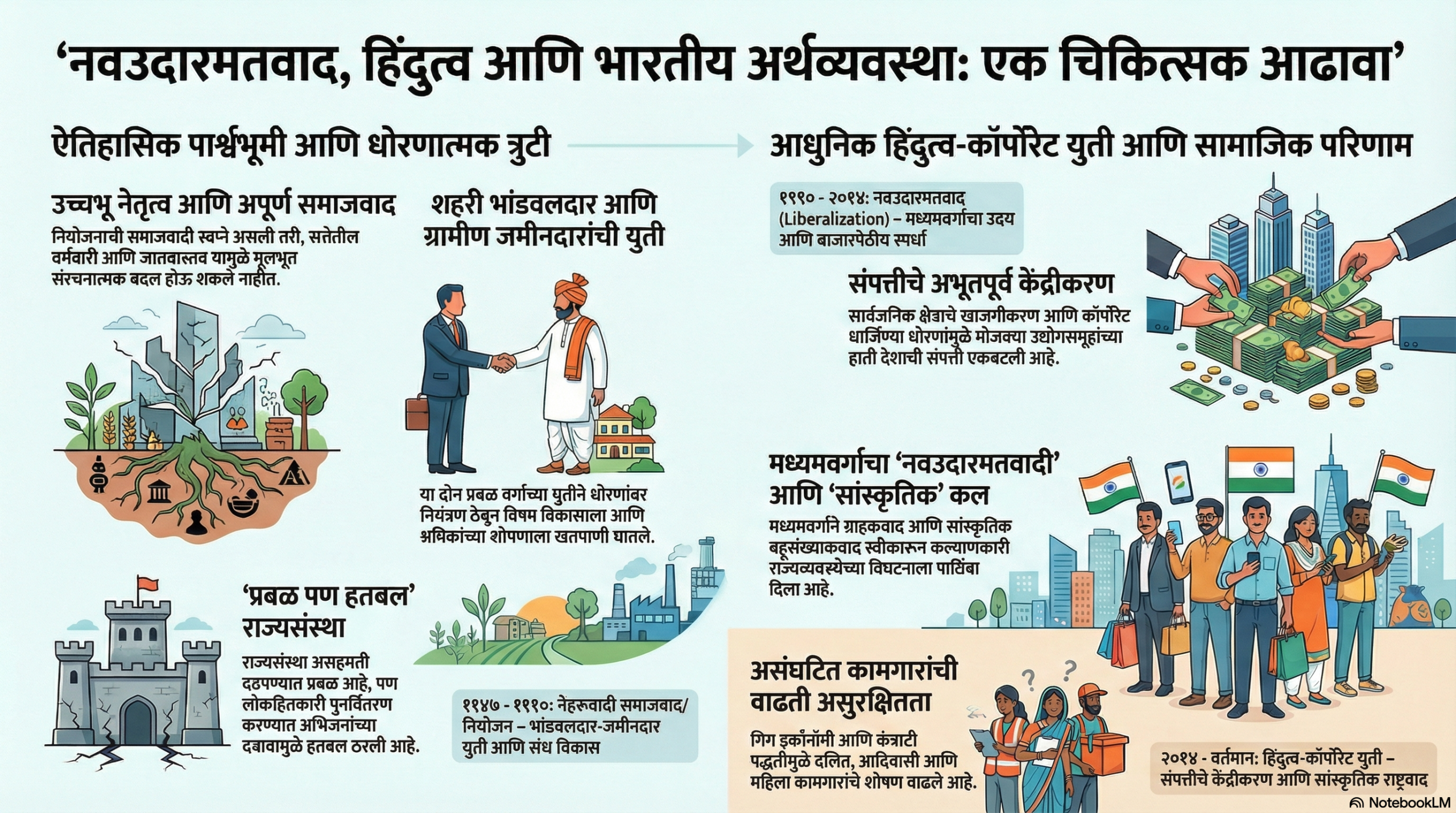
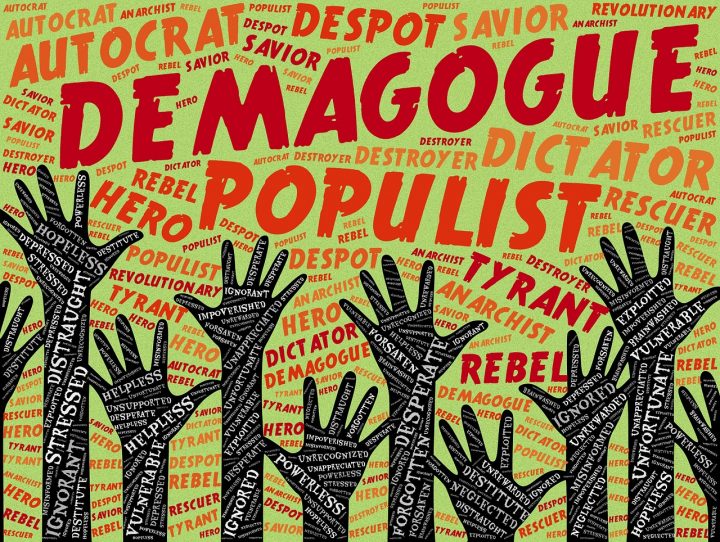
    “Nations are not something eternal. They began, so they will come to an end”, said Ernest Renan in his celebrated article ‘Qu’est-ce qu’une nation?’ In the contemporary period, the perversion of nationalism by stressing ethnic politics has damaged the post-colonial legacy of nationalism and is now considered a problem in the general academic discourse and the public as well. Amidst the surge of Hindu Nationalism and Populism, set up using the state apparatus in contemporary India, it’s vital to discuss the role of the state, political party, market, and relationally embedded individuality. It is also equally important to understand whether a newly emerging Indian Nation, itself a modern imagined community, has anything to do with neo-liberal aspirations of individuals.

    Certain parameters have been instrumental in shaping nations and, subsequently, nationality and nationalism. The foremost among them is ‘territoriality’, which is an essential component to build up the narratives of nationalism; second is ‘identity’, with the help of which masses could be galvanised and consolidated, and the third is ‘homogeneity’ within a society, embodied in that particular nation-state to sustain this model based on nationalism, populism and majoritarianism.

    Today’s narratives of nationalism and populism of the RSS-led BJP government are far newer and, to some extent, different from those of RSS-patriarchs like Savarkar, Hedgewar and Golwalkar. Savarkar’s nationalist narratives based on Hindutva were more of an ‘identity’ approach, which sought to assert ‘Hindutva’ in a territorial sense, i.e., in terms of ‘son of the soil’ and the ‘Vedic fathers’. Whereas Golwalkar and Hedgewar’s Hindutva-nationalist narratives were based on ‘spirituality’, embedded within the religious ideas of ‘Hinduism’ and ‘cultural’, which endorsed religious identity and the practice of the ‘Sanatana-Dharma’ as well.

    However, to impregnate such majoritarian-nationalist narratives in the minds of the masses, one does not only need rhetorical building, but also institutional and organised support. RSS does the work of rhetoric-building and organisational support, and the BJP was/is supposed to provide institutional support. This is why it becomes essential to look at Modi’s populist politics of nationalism through the prism of the state—its policies, political party, service it provides, and the market that endorses and sustains such politics and the individuals who become its foot soldiers.

    We would first examine the role of the state in this article, which plays a vital part in defining and asserting the politics of territoriality. To provoke the masses and capture their imagination, the BJP, since it came to power in 2014, has continually used territoriality to inspire them to become part of its political project of Hindutva nationalism. The hyper-nationalist narratives have been employed for this purpose, like Uri “Surgical Strike” (subsequently a movie on it), making Pakistan the enemy state, passing the ruptured legislature on Indo-Bangladesh Border issues; recently, revoking Article 370 and the NRC Bill, et al. This is how the BJP systematically sought to leverage territoriality to attract mass support. Secondly and most importantly, the BJP came up with innovative ideas to reach the masses using the state apparatus itself. The factor that distinguishes the BJP’s nationalism from that of Indira Gandhi is that it can successfully use both institutional and procedural mechanisms. It has become evident that fascist forces find it easier to incorporate ideas within a bourgeois democratic framework, whose institutions and procedures are integral parts. Indira Gandhi could only use institutions to advance her politics of nationalism and populism, but never could (or never wanted to) hijack the procedural mechanisms that still survived within the democratic framework in India. Nonetheless, the BJP could do it, bending and moulding procedures in its own way to establish the politics of populism through measures like demonetization, passing the Aadhaar Bill as a money bill, and invoking Article 356 (President’s Rule) in various states, undermining precedence and procedures. If, for now, we take the example of JNU and how the government is using the institution and procedures as well, to suppress the free voices of students and label dissent as treason and issue certificates of anti-nationals. Here, in the JNU case and in other educational institutions, the BJP is not only using institutions to control power through the appointment of compliant personnel but also flouting established constitutional and procedural norms, such as failing to involve students’ unions in crucial decision-making, controlling the curriculum, and censoring the speeches of critics.

    The role of the BJP as a ‘political party’ can be better understood in terms of rhetoric-building with the RSS’s help. The majoritarianism of the BJP as a party combines cultural nationalism based on identity and othering the rest of the communities, which also includes cultural conservatism, intensified misogyny, and a firm grip on societal forces using services. This cultural nationalism of RSS-BJP demand homogeneity in the society, most of the times which can be brought about only with ‘ascribed-identities’. And to achieve this, it tries to build grand narratives to subsume all other small, regional, and local identities; one such narrative is ‘Hindi-Hindu-Hindustan’. This kind of narrative not only encourages the upper castes and upper classes to be a part of its political project but also has the capacity to subsume large numbers of OBCs, Dalits and tribals as well. This galvanisation of masses is done through services provided by RSS itself and its on-the-ground offshoots, such as various ‘prabodinis’, ‘vanseva samitis’, ‘shakhas’, etc. Such offshoots do the work of ‘Sanskritisation’ and ‘Hinduisation’ of communities other than the upper castes, which ultimately helps the required homogenization of the society to build its own hegemony. Jairus Banaji says, in India, the growth of fascism has been a gradual, step-by-step process where the fascist elements penetrate all sectors of society and emerge having built up that groundwork.

    Thus, it becomes very important to understand how this mass base is constructed. What allows for the construction of a mass base by radical right-wing parties? Generally, fascism presupposes a worldwide economic crisis, but in the case of India, the BJP’s majoritarian nationalism presupposed (before the 2014 elections) the moral crisis in terms of corruption, and that is how Anna Hazare’s protest was hijacked by RSS-BJP. We could also say that such fascist majoritarianism was not the creation of RSS-BJP, but the victory of BJP in the 2014 general elections (and any election BJP won thereafter) was the creation of majoritarianism that came out of an ‘imagined’ moral crisis. The Commonwealth Scam, Coal-gate Scam, Anna’s protest against corruption, orchestrated attacks on minorities in Orissa in 2007 and 2008, and in Muzaffarnagar in 2013, and many more such events served as precursors to a moral crisis that captured public imagination, helping the BJP win elections in a big way. Beyond this, as Christophe Jaffrelot says, the BJP, as a political party, has also been using innovative communication techniques—repeated ad nauseam — catchy, vague slogans that attracted the masses, though all were empty signifiers, for example, ‘Acche Din Aanewale Hein!’. There has also been the use of certain religious artefacts, myths, rituals, and symbols through which deification is achieved. For example, the posters of fiery Hanuman, angry Shiva, Rama on the battlefield, such symbols we see, helped assert the putrid ‘purushartha’ (virtue of being male), which ends up being glad/satisfied in doing ‘mob-lynching’. These are also called ‘stormtrooper tactics.’ Banaji again says—’hate propaganda clears the ground for physical attacks and mass killings by producing a ‘climate’ of violence where communal ‘riots’ (i.e. pogroms) can ‘flare up’ (be organised) at any point of time. The “climate” is worked matter, the object of a concerted praxis.’

    The schools, the job-places, the families, and the whole society become the factories of ‘reactionary ideology’ of which whataboutery becomes the merest weapon. However, such tactics produce societal homogeneity based on hatred and jingoism; subsequently, the market helps sustain such politics. To understand this, we need to go back to the period around 1991, when three instrumental forces were at play, which enabled the BJP to capture public imaginations and consolidate mass support for its every wrongdoing. These forces were market, mandir and Mandal. It amazes us how RSS-BJP could get such mass support, being known as an upper-caste Brahmanical organisation, especially from OBCs and Dalits. For me, the reason lies in the opening of the economy in 1991 with the New Economic Policy, generally known as the Liberalisation-Privatisation-Globalisation (LPG) reforms, and in the subsequent Neo-liberal framework. It is also evident from many surveys that the BJP has the largest vote bank of OBCs, the middle class, and new entrants to the middle class.

    The question of locating individuality within discourses of nationalism in India must be considered pertinent in the context of the historical development of populism post-independence, which intersects with state policies and later with the advent of the neoliberal framework in Post-reform India. If we look at the historical trajectory of development of OBC block as a political power and economical pressure group, we could see rise of OBCs initially in post-independence period with fragmentation of land, subsequent green revolution and new technological innovations in farming; their entry into new services sector on the advent of reforms and free market—this could help OBCs to uplift themselves as an economic force. The Mandal Commission gave them a chance to uplift socially as well; reservations in education and government jobs could do wonders for them. Nonetheless, mandir politics could not remain separate from them. For the first time, OBCs had the chance to rub shoulders with the upper castes (especially Brahmins), and we could see them adopting Brahmin rituals, sacred thread ceremonies, and other practices. This was not happened in isolation; in effect it went beyond OBC block too, this miraculous rise of OBCs inspired other communities too.

    The combination of the promise of economic prosperity, political power, and social upliftment created a neo-middle class and inspired the masses to be part of this joint-venture project of Mandir and Market. People’s aspirations rose since then, yet no one could see or understand that there would always be a gap between aspirations and achievements. In effect, OBCs, Dalits and other marginalised communities started playing a role as individual hyper-consumerists. In addition, neoliberalism created a space for such individuals to serve as precursors to hyper-nationalist narratives. The narrative of “development” although an empty signifier, culminated in suppression of cultural anxieties, and populism lying between that void space of aspirations and achievements, thereupon pacifying the public outrage against any illiberal, autocratic move of the current government.

    Harsh Mander has said that this neo-middle classes are today socialised in not one but three normative systems which justify every act of BJP government—caste system, ‘refined’ lifestyles’ and rise of neo-liberal-market-led growth with ‘socialist guilt’. That is why it is very important to understand nationalism not only as an isolated project but also its connections with the conspicuous lethal project of the BJP as a political party and state-backed neo-liberalism, which has galvanised masses to be a part of it, and this poses an immense threat to the very social fabric of Indian society. Hence, we need to understand this whole structure, develop a critique, and act accordingly.

  • ‘संरचनीय हिंसा’च आजच्या स्त्री-पुरुषांमधील आर्थिक असमानतेचे आणि सामाजिक अपवर्जनामागील कारण आहे!

    ‘संरचनीय हिंसा’च आजच्या स्त्री-पुरुषांमधील आर्थिक असमानतेचे आणि सामाजिक अपवर्जनामागील कारण आहे!

    अक्षरनामा (Tue , 05 November 2019)

    अर्धेजग – कळीचे प्रश्न
    हितेश पोतदार

    https://www.aksharnama.com/client/article_detail/3767

    आजतागायत स्त्री-वादाची भारतातील मांडणी ही सूक्ष्म पातळीवरील म्हणजेच मायक्रो-लेवलवरील आहे. याचाच अर्थ स्त्रियांचे कुटुंब व्यवस्थेतील स्थान, रोजच्या जीवनातील पितृसत्ताक व्यवस्थाप्रणित आव्हाने, रोजगारांमधील संधी अशा इतर अनेक महत्त्वाच्या प्रश्नांविषयी ही मांडणी मुख्यत्वे दिसून येते. अशा सर्व प्रश्नांकडे बघण्याचा दृष्टिकोन हा (अतिसुलभीकरणातून येणारा) मूल्यनिर्णयात्मक आहे. सोप्या भाषेत स्त्री-प्रश्नांकडे नैतिकता, नीती आणि तत्त्वे अशा प्रिझममधून आपण बघतो. जी स्त्रियांसकट इतर उपेक्षित (marginalised) सामाजिक गटांचा लढा उभारण्यासाठीची पहिली पायरी मानली जाते. मात्र आता वेळ या कोषातून बाहेर पडून मॅक्रो-लेवलवरील मांडणी करण्याची आहे. म्हणजेच स्त्री-पिळवणुकीकडे, शोषणाकडे आणि ती करणाऱ्या दडपशाहीकडे ‘रचने’च्या (structural) स्वरूपात बघणे फार गरजेचे आहे. प्रख्यात समाजशास्त्रज्ञ अखिल गुप्ता जसे ‘गरिबी’विषयी म्हणतात की, गरिबी ही एक संरचनात्मक हिंसा आहे; त्याचप्रमाणे स्त्रीशोषण हे आज अदृश्यरीत्या हयात रचनेने अखंड ठेवण्यात येते. स्त्रीप्रश्नात सामाजिक हिंसा असूनही त्याला स्कॅम म्हणून उघडकीस आणले जात नाही, कारण त्यातून येणारा असंतोष आणि सार्वजनिक आक्रोश हा सबंध रचना उलथवून टाकण्याएवढी क्षमता ठेवतो.

    लिंगभेदभावसुद्धा तितकीच गंभीर हिंसा असून ती या समाजाच्या, रचनेच्या आणि सिस्टिमच्या संमतीने कायम आहे. ही ‘संरचनीय हिंसा’च (Structural Violence) आजच्या स्त्री-पुरुषांमधील आर्थिक असमानतेचे आणि सामाजिक अपवर्जनामागील (Social Exclusion) कारण आहे. तिचाच उहापोह आपण या लेखात करूयात.

    इथे जेव्हा आपण हिंसा हा शब्द वापरतोय तो थेट हिंसेविषयीच मर्यादित न राहता, व्यापक अर्थाने येतो. हिंसा ही शारिरीक हिंसेच्या पलीकडे आर्थिक, सामाजिक, मानसिक म्हणजेच एकंदरीत संरचनात्मक बनते. म्हणजेच आपण जेव्हा वरील उल्लेखलेल्या स्त्रीप्रश्नांकडे (स्त्रियांचे कुटुंबव्यवस्थेतील स्थान, रोजच्या जीवनातील पितृसत्ताक व्यवस्थाप्रणित आव्हाने, रोजगारांमधील संधी व इतर अनेक) बघतो, तेव्हा त्याचा विचार हा संपूर्ण सामाजिक रचना म्हणून व्हायला हवा. ज्या व्यवस्थेचा पितृसत्ता हा फक्त एक पैलू म्हणून दिसायला लागतो. माझ्या एका मैत्रिणीला तू ‘राज्य’ (State) या संकल्पनेकडे कशी बघतेस असे विचारले असता, आमच्या चर्चेतून असा निष्कर्ष काढण्यात आला की, ज्या देशात तुम्ही देशाला ‘माता’ म्हणून संबोधतात त्या ‘माते’ला कंट्रोल करायला तुम्हाला ‘पितृक-राष्ट्रराज्या’ (Patriarchal State)ची गरज भासते. म्हणजे थोडक्यात काय तर मुळात ‘राष्ट्र-राज्य’ हेच मुळात स्त्रीविरोधी भासू लागते. परंतु माझा युक्तिवाद हा त्याला यापलीकडेही बघण्याचा आहे. मुळात ‘राष्ट्र-राज्य’ नियंत्रित करणारी व्यवस्थासुद्धा त्यापलीकडची आहे. अशा व्यवस्थेला आपण उत्पादनाच्या साधनांवरील मक्तेदारी किंवा मालकीच्या दृष्टिकोनातून बघणे फार गरजेचे आहे. जसे प्रख्यात अर्थतज्ञा यू. कल्पगम म्हणतात- लिंग आणि वर्ग हे कधीच विश्लेषणाची दोन स्वतंत्र श्रेणी नव्हत्या. कारण भांडवलशाहीची शक्ती आणि पुरुषप्रधानत्वाची विचारधारा यांचे संयोजन हे कायमच रचनेत होते. महिलांच्या कामाचे स्वरूप हे सदैव पितृसत्तेचा थेट वापर करत भांडवलशाहीच्या शक्तीने ठरवले आहे. जर स्त्रिया बरोबरीने मार्केटमध्ये प्रवेश करू शकत नसतील, तर त्यामागे भांडवलशाही विकासाचे विचित्र स्वरूप आहे. कारण भांडवलशाहीचा कुठल्याही देशातील विकास हा त्यातील पूर्वीच्या सर्व व्यवस्था मोडीत काढून होत असतो. म्हणजे जसे युरोपात झाले. तेथील भांडवलशाही ही सरंजामव्यवस्थेच्या अस्थींवर स्वार होऊन आधुनिक विचारांच्या आड उदयास येते. परंतु भारतात तिचा विकास हा जातीव्यवस्था व पितृसत्ता यांना धक्काही न लावता/लागता झाला आहे. त्यामुळे भांडवशाहीचा भारतातील विकास हा पितृसत्तेवर व जातिव्यवस्थेवर सुपरइम्पोज करून झाला आणि पूर्वीची स्त्री-श्रम रचना तशीच राहिली. त्याने स्त्रियांना सर्वांत कमी दर्जाच्या व कमी प्रतीच्या कामांमध्ये ठेवले गेले. कारण जागतिकीकरणामुळे आणि अर्थव्यवस्थेच्या बाजारीकरणामुळे त्यांचे श्रम हे भांडवलात विलीन झाले.

    ‘स्त्री-श्रम’ हे अशा भांडवली व्यवस्थेत राखीव म्हणून मानले जाते. कार्ल मार्क्सच्या ‘कामगारांच्या राखीव सैन्या’ची (Reserved Army of Labour) संकल्पना इथे वापरल्यास, स्त्री-श्रम हे या ना त्या प्रकारे कायम राखीव म्हणून समजले गेले; ज्या श्रमाचा वापर हा फक्त रोजगार आणि वेतन नियंत्रित करण्यासाठी होतो. ज्याने घरगुती श्रमाच्या गतिशीलतेचा विचार करण्याऐवजी त्या श्रमातून भांडवशाहीचे दुय्यम प्रश्न निस्तरण्याविषयीचा विचार होऊ लागतो. यामुळेच स्त्री-श्रम हे मागणी-पुरवठा फ्रेमवर्कद्वारे ठरवले जाते, परंतु वेतन/रोजगार-निर्धारात पुरुषप्रधान व्यवस्थेची भूमिका अनिश्चित म्हणून सुटते आणि याने सबंध पितृसत्ताक व्यवस्था अधिक प्रभावीपणे भांडवशाहीला पूरक ठरते. यावर आपण ‘Working Womens Forum’ आणि ‘SEWA’ या संस्थांचे ‘Struggle through development’ व ‘Empowerment through Self-Activity’ हे रिपोर्ट वाचावे. ज्यात आपल्याला सत्ता-रचणेविषयी म्हणजेच power-structure विषयी अधिक माहिती मिळते.

    अशा भांडवली व्यवस्थेत स्त्रीने रोजगार-क्षेत्रात येणे/नोकरी करणे हे तिच्यावर दुहेरी जबाबदारी टाकते. एकीकडे पितृसत्तेने स्त्रीला घरगुती कामात गुंफून ठेवलेय आणि दुसरीकडे भांडवशाहीच्या अधोगतीने कुटुंबावर उदरनिर्वाहासाठी स्त्रीला कामासाठी घराबाहेर खेचणे, यात तिची दुहेरी बाजूने ससेहोलपट होते. परिणामी मानसिक व शारीरिक त्रासही सहन करावा लागतो. अशी परिस्थिती ‘Double Burden, Low-wages’कडे घेऊन जाते. म्हणजे पितृक-भांडवशाहीत स्त्रीशोषण हे दुप्पटीने वाढते. त्यात वाढत्या औद्योगिकतेने ही विभागणी कठोरपणे आणि वेगवानरीत्या होते, ज्याने घर आणि बाहेरील काम यांच्यातही विभागणी होऊन स्त्री आणि पुरुष यांच्यातील श्रमसंबंधांतील विषमता तीव्र होते. आज भारतात कारखान्यात काम करणाऱ्या स्त्रियांची परिस्थिती ही अठराव्या-एकोणविसाव्या शतकातील युरोपात काम करणाऱ्या स्त्रियांसारखी आहे, ज्यामुळे तेथे खऱ्या स्त्री-चळवळीला सुरुवात झालेली दिसते.

    आज असेही दिसून येते की, स्त्रियांचे घरकाम हे आऊट-सोर्स केले जाते किंवा sub-contract केले जाते. आणि भारतातील कामगार धोरणे घरकाम करणाऱ्यांना सेल्फ-एम्प्लॉईड म्हणून धरते, ज्यांना कसले, कुठे आणि केव्हा उत्पादन करायचे याची स्वायत्तता असते. ज्याने घरकाम करणाऱ्या स्त्रियांना कामगारांचा दर्जा नाकारला जातो आणि सर्व घरकाम करणाऱ्या स्त्रिया (स्वतःच्या घरात किंवा अगदी मोलकरीण म्हणून दुसऱ्याच्या घरातही) धोरणांच्या फायद्यांपासून खूप लांब राहतात. भांडवल केवळ पूर्वीच्या अस्तित्वातील लिंग कोडसह समन्वय साधत नसून स्त्रियांना गृहजीवनापर्यंत मर्यादित ठेवते, परंतु महिलांची स्थिती कामगारांची असली तरीही पितृसत्ता अधिक टिकाऊ बनते.

    भांडवलशाही आणि पितृसत्ता दोघे एक नवीन रचना बनवण्याच्या मार्गावर असतात. जिथे भांडवलशाही जास्तीत जास्त नफ्यासाठी रोजगार/वेतन कपातीमध्ये स्वारस्य ठेवते, तर पितृसत्ता ही महिलांना डोमेस्टिक स्फिअरमध्ये बांधून ठेवण्यात रस ठेवते आणि ही नव्याने बनलेली संरचना महिलांना भेडसावणाऱ्या अनेक असमानतांना जन्म देते. जेथे महिलांचे औपचारिक श्रम (Formal work) अनौपचारिक क्षेत्रात (Informal Location) एकटवतात. म्हणूनच स्त्रीप्रश्नांकडे वेगळ्या संबंध-प्रणालीच्या दृष्टिकोनातून बघितले जायला हवे; जिथे सामाजिक रचनेचे घटक कसे श्रमाच्या लैंगिक विभागणीला प्रभावी करतात हे दिसते. आणि याच विभागणीतून निर्माण होणाऱ्या विषमतेत आपल्याला पुरुषांकडे एकटवलेली सत्ता/अधिकार/शक्ती दिसून येते.

    आता काही अहवालांवर दृष्टिक्षेप टाकुयात. २००९-१०साली घेतलेल्या नॅशनल सॅम्पल सर्व्हेच्या ६६व्या फेरीत असे दिसून आले की, घरगुती कामात आणि घरकामात असलेल्या महिला या अतिशय वंचित गटात मोडतात व त्यांना एकाधिक असुरक्षितेतून जावे लागते. यांपैकी बहुतांश स्त्रिया या दलित समाजातून असल्याचे दिसून येते. याचाच अर्थ असा की, पूर्वीच्या जुलमी व्यवस्था तशाच ठेवून भांडवलशाहीने समजूतरंडीवरून जसे खाली जाऊ तसे शोषण वाढत जाते. आणि त्यातही महिलांचे शोषण अधिक असते. तसाच ऑक्सफॅम इंटरनॅशनल या जागतिक संस्थेचा असामानतेवरील अहवालही असेच संकेत देतो. ऑक्सफॅमच्या अहवालातून असे दिसते की, एक- गरिबीची जास्त झळही मुलींना व स्त्रियांना जास्त सोसावी लागते. दोन- सारख्याच दर्जाच्या कामासाठी पुरुषांना मिळणाऱ्या रोजगार/वेतनापेक्षा ३४ टक्के कमी वेतन स्त्रियांना मिळते. इथे वर मांडलेली राखीव सैन्याची व एकंदरीत स्त्रियांचे वेतन नियंत्रित करण्याचा सिद्धान्त खरा ठरतो. तीन- जेव्हा शासन सार्वजनिक सेवांवरील म्हणजेच आरोग्य आणि शिक्षणावरील खर्च कमी करते, तेव्हा याचा परिणाम सोसणारी पहिली फळी ही मुली व स्त्रियांची असते. म्हणजेच स्त्री-स्वातंत्र्याचा लढा हा घरापासून जरी असला तरी तो घरापुरताच मर्यादित न राहता सरकार/शासनापर्यंत जाऊन ठेपतो. जे सरकार हे स्वतःतच एक रचनेचा घटक असते. चार- भारतीय स्त्रिया या पाच तासांपेक्षा जास्त श्रम कुठलाही मोबदला न मिळता करतात, दुसरीकडे पुरुष फक्त अर्धा तास मोबदल्याविना करतात. पाच- बिहार, झारखंड आणि उत्तरप्रदेश सारख्या राज्यांत ६०टक्क्यांपेक्षा जास्त लोक (स्त्री-पुरुष) दोघेही धरून विचार करतात की, कुठे श्रमाच्या बाबतीत चुकल्यास स्त्रीला दूषणं देणं आणि तिच्यावर हिंसाचार करणं हे स्वीकार्य आहे. याचा अर्थ हिंसाचारामुळे महिला सतत आर्थिकदृष्ट्या मागे जातात आणि एका दुष्ट चक्रात अडकतात.

    म्हणूनच मुळात सध्याच्या मोदी सरकारचेही नवउदारमतवादी व्यवस्थेतून येणारे विकासाचे आणि प्रगतीचे नॅरेटिव्हज हे मुळातच खोट्या आधारावर उभे आहेत. तिथे विकास कुणाचा, हा प्रश्नही आज विचारणे अधिक गरजेचे आहे. त्या विकासाच्या व्याख्येत स्त्रिया कुठे बसतात? असे प्रश्न विचारणे गरजेचे आहे. मात्र आज फक्त भांडवलशाहीचा नव्हे तर धर्माचाही उपयोग पितृसत्तेला बळकट करण्यासाठी होतो; जेथे धर्मातून येणारा फाजील ‘पुरुषार्थ’ हा मॉब-लिंचिंग करण्यात धन्यता मानतो. मुळात धर्मच जर स्वतःचे गाडे जातीव्यवस्था आणि पितृसत्ता या दोन चाकांवर चालवत असेल आणि भांडवलशाही त्यावर स्वार होत असेल, तर अशा संरचनात्मक हिंसेचा मुकाबला करणे हे ही रचना उलथवून टाकण्यातच आहे. त्यासाठी त्याची हवी तेवढी चिकित्सा होणे फार गरजेचे आहे. या रचनेच्या घटकांची गुंतागुंत जाणून घेणे गरजेचे ठरते. तरच कदाचित आपण त्या समतावादी ‘egalitarian’ समाजाचे स्वप्न पूर्ण करू शकू.

    ………………………………………………………………………………………………………..

    लेखक हितेश पोतदार विविध महाविद्यालयं आणि स्पर्धा परीक्षा केंद्रांत राज्यशास्त्र आणि अर्थशास्त्राचे अध्यापन आणि अध्ययन करतात.

    hdpotdar199@gmail.com

    ………………………………………………………………………………………………………..

    Copyright www.aksharnama.com 2017. सदर लेख अथवा लेखातील कुठल्याही भागाचे छापील, इलेक्ट्रॉनिक माध्यमात परवानगीशिवाय पुनर्मुद्रण करण्यास सक्त मनाई आहे. याचे उल्लंघन करणाऱ्यांवर कायदेशीर कारवाई करण्यात येईल.

    ………………………………………………………………………………………………………..